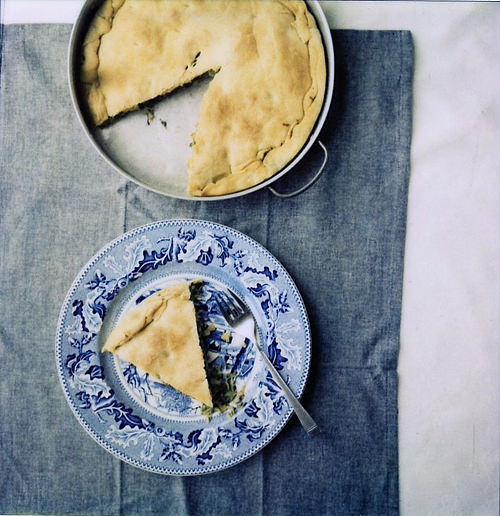
Where would we be without “pita”? In this instance I refer to pita as meaning a Greek pie-very similar to my spanakopita or spinach and fetta pie. Pites (plural) in Greece come in many shapes and forms and are very much dictated by regionality, ingredients and local customs. Anyone (you know…those people who proclaim themselves as “experts”and suffer from delusions of grandeur…especially on the internet) who tells you otherwise is a fool. The many people who left Greece and made their way to other parts of the globe certainly brought along their local traditions with them. For e.g. here in Australia, I grew up with kids of Greek descent whose parents hailed from Crete, Thessaly, Thessaloniki and the Peloponnese. Every time I went to their houses their food was “Greek” but obviously influenced by where their parents came from in Greece. This is where I learned and ate about the many different pites they created! Don’t get me wrong, my mother often cooked pites but would never venture beyond the usual spanakopita or tyropita. Maybe it had to do with me being a “fussy” eater as a child! Still, I marvelled at her skill at being able to naturally roll out a dough or phyllo with ease. Something which I still can’t do properly! But I’m getting there. Just.

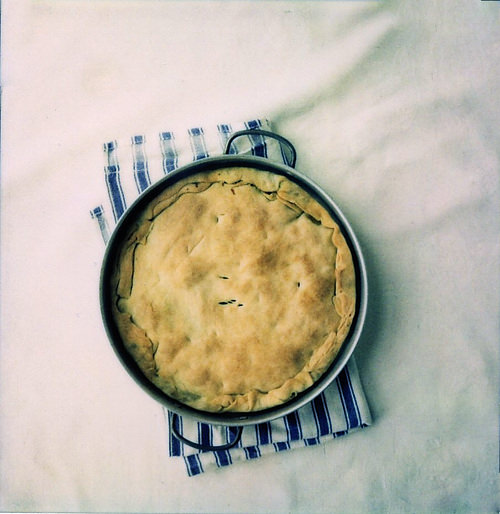
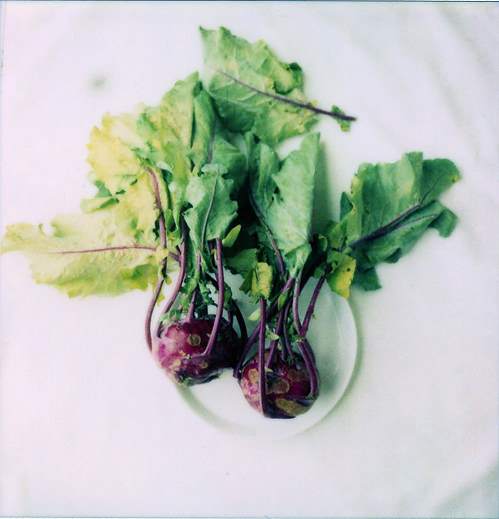
What does this have to do with kohlrabi you may ask? Well, when I recently purchased some at the markets I had no idea how I was going to cook it. I’ve seen kohlrabi used in a lot of recipes on blogs from the US but still it was very foreign to me. Many internet searches later, nothing had “grabbed” me, so I let it sit in the fridge for a few days. In the meantime, my cravings for a pita of some sort were surfacing and I decided I would attempt to use the kohlrabi and make a pie with it. Along with a few other things in my fridge-a bag of store bought baby spinach used for quick salads, a few leeks and half a bunch of silverbeet I set out to make a filling for the pita. When it came to making the dough, I used a recipe for Provencal pastry that I had bookmarked from Ivy’s blog. Ivy had adapted it from the Constable’s Larder which is the one I ended up using. What a delight to make a pastry dough that was easy to use and roll out. I mixed mine in the food processor and it required no more extra touches! It’s become my new “go to” pastry and a wonderful way to enjoy home made pites. The kohlrabi and greens pie was so delicious I snacked on it for a few days.
RECIPE FOR KOHLRABI AND GREENS PIE
N.B. I used an 11″ “tapsi” or pan to make my pie in. You could also use any other type of filling for the pie. Be creative.
FOR THE PROVENCAL PASTRY
(Adapted from The Constable’s Larder)
- 2 cups of plain flour
1/4 cup olive oil
1/4 cup tepid water
1 egg
1/4 tsp salt
Blend all the ingredients together in a food processor until they form a ball. Remove it from the bowl, pat it and smooth it out, cover with plastic wrap and let it rest in the fridge for about 1 hour.
FOR THE FILLING
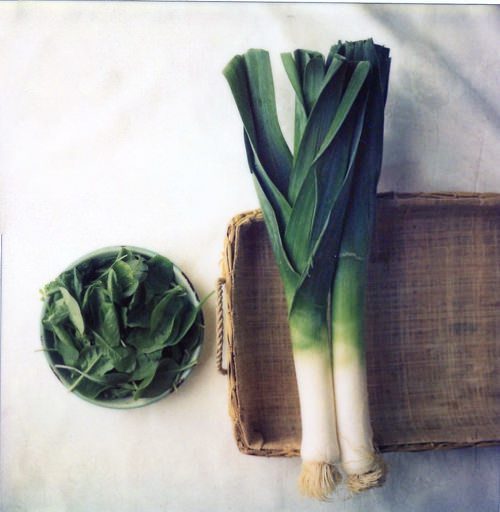
- 2 leeks, scrubbed and finely sliced
- 1 clove of garlic finely chopped
- 2 head of kohlrabi finely grated
- 1 bunch of silverbeet or Swiss Chard, washed and finely shredded
- 1 bag of baby spinach
- 4 tablespoons of chopped dill
- 4 tablespoons of chopped parsley
- salt and pepper to taste
- Saute the leeks and garlic in a little olive oil over a medium heat until it becomes translucent.
- Add the kohlrabi, silverbeet and baby spinach and toss thoroughly ensuring everything is mixed well.
- Cook for 5-7 mins and remove the mixture from the heat.
- Add the parsley, dill, salt and pepper.
- Mix and set aside.
ASSEMBLING THE PIE
- Remove the pastry from the fridge and divide into 2 parts.
- Using a rolling pin, roll out the 2 parts of dough into a circle, ensuring one is slightly larger than the other.
- Place the larger piece of dough into a well oiled pan ensuring the excess hangs out over the side a little.
- Add the kohlrabi and greens mixture and smooth out.
- Add the second layer of rolled dough and proceed to seal the edges by folding the larger bottom dough over the smaller pie cover.
- Brush generously with olive oil, pierce the centre of the pie a few times (to allow the steam to escape) and place in a pre heated 180 deg C oven
- Cook for approx 50 mins or until the dough becomes a lovely golden colour.
- Let it rest before serving at room temperature.
For all you camera enthusiasts all the pictures in today’s post were shot on a Polaroid SX-70 camera.
Print This Delicious Post


{ 28 comments… read them below or add one }
Beautiful photos, and great meal idea!
peter this is my kind of meal. you and me we’d have a grand time enjoying this over a glass of wine. love the look of these shots!
I am glad that you tried Richard Olney’s provencal pastry. It’s so easy to handle. In Cyprus we had kohlrabis, called kourvoules, but only ate them raw with lemon, as an appetizer. The past few years I’ve seen them in the farmers’ market in Greece and maybe I should try them cooked this time.
I’ve never seen pastry made with olive oil, and now I’m curious to try. I am experimenting all the time with pastry, but I’m not sill where I want to be. As far kohlrabi, I see it, have never made it, and it’s on the list. Swiss chard, however is my new fave and I’m posting on it tonight.
From the pastry to the filling for this pita it is a winner from start to finish. Funny how I am reading your posts in an Australian accent now:D
I would definitely try this pita, although I’ve never had kohlrabi before. It’s so alien looking to me :-p
What do you use to scan your polaroid pictures. I love how they look!
this really is to die for – i get kohlrabi given to me from my uncles’ farm – now i know what i am going to do with it very soon. this really is a special recipe
wow, fantastic. Love the grading of these photos. An exposure you just cannot get with modern digital cameras.
This looks delicious! I love savory pies, and I have never used kohlrabi – but if I ever see it at the markets here, I will pick some up! I love learning about food and how it changes once people leave the “motherland” and go somewhere else. Learning to make traditional dishes with sometimes new ingredients and methods based on availability in their new country.
What a gorgeous pie! So original. I love the ingredients you used.
As usual, your pictures are perfect!
Cheers,
Rosa
I’ve only tried kohlrabi raw as well so I am really interested in trying this pita. I’ve been on the lookout for a great go-to pastry and this sounds perfect. Lovely pita Peter!
Greta pics Peter! I like the effects and moods you achieve with the different cameras
Peter this is such an interesting vegetable that I have never heard of before. You are doing good at pastry making. I love the feeling of working with pastry dough and seeing the results. Love the pics!
A pastry dough w/ olive oil? Interesting… You know, I remember seeing it on Ivy’s site and thought it was different. So this is the 2nd person I follow to try it, maybe it’s about time I do too!
I lurve this dish! It’s basically lent friendly too. Gonna have to give it a whirl. So interesting about the Greek diaspora in Australia too…
I have to be honest…I have never heard of kohlrabi, but this has definitely piqued my interest. I do really love the throwback pictures though!
Some of the best foods (Greek) were at friends’ homes and just like you said it…all Greek food but with subtle regional differences. How boring would Greek food be if we all made the same dish, look the same like it was moulded by a German and looked like a TV dinner? Gross!
Kohlrabi, now there’s an ingredient I’ve never cooked with before but it sounds like a good candidate for pita…anything goes!
Gorgeous photos – you have inspired me. What a great blog.
Sounds amazing. I’ve never used kohlrabhi either and mmm… spanakopita – now that’s my kinda pie!
Kohlrabi is little used and a bit misunderstood (at least where I live) so It’s exciting to see it get its day the glorious Greek sunshine! GREG
I like kohlrabi, but never used it to make a pie! I have to try it. I love you photos, you are a real master of your camera!
I’m a big fan of savory pies, especially when they are vegetable-based. I was a little surprised there was no cheese. I was expecting to see feta in the list of ingredients. Did you/would you think of adding cheese?
Joan you could easily add cheese to this. I just wasn’t feeling like it on that day plus I wasn’t sure how it would pair with the kohlrabi.
I love those polas Peter…such beautiful light in your part of the world & of course beautiful composition…& of course i’d eat that pie too
oohh — This looks very good. The photos are beautiful as well!
lovely recipe — and isn’t that Olney pastry recipe great? I absolutely adore the photographs as well — is that polaroid?
indeed a lovely recipe… any kind, any sort of vegetables are my love… a perfect Hortopitta…
This looks amazing, and I’m absolutely making it tonight! I have a fresh delivery of kohlrabi AND chard in my fridge just waiting to be used up.
Your photos are beautiful.. the SX-70 is my all time favorite camera, but where did you get the film (or are you using old stock)? It’s no longer available here in the US, although reproduction of some types of the film have started. Not ventured to try them yet.
Anyway, wonderful images!