

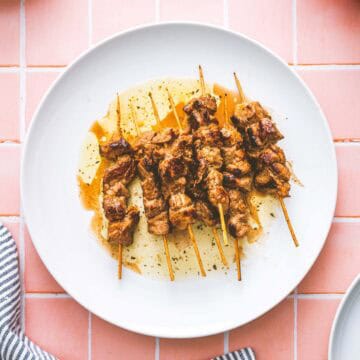
Greek pork souvlaki is one of those recipes that never lasts long at my table. Tender pieces of pork are marinated in olive oil and a unique blend of spices, then grilled until lightly charred and juicy. Serve it with warm pita bread, tzatziki and a generous drizzle of ladolemono for an easy meal that's perfect for barbecues and casual dinners.
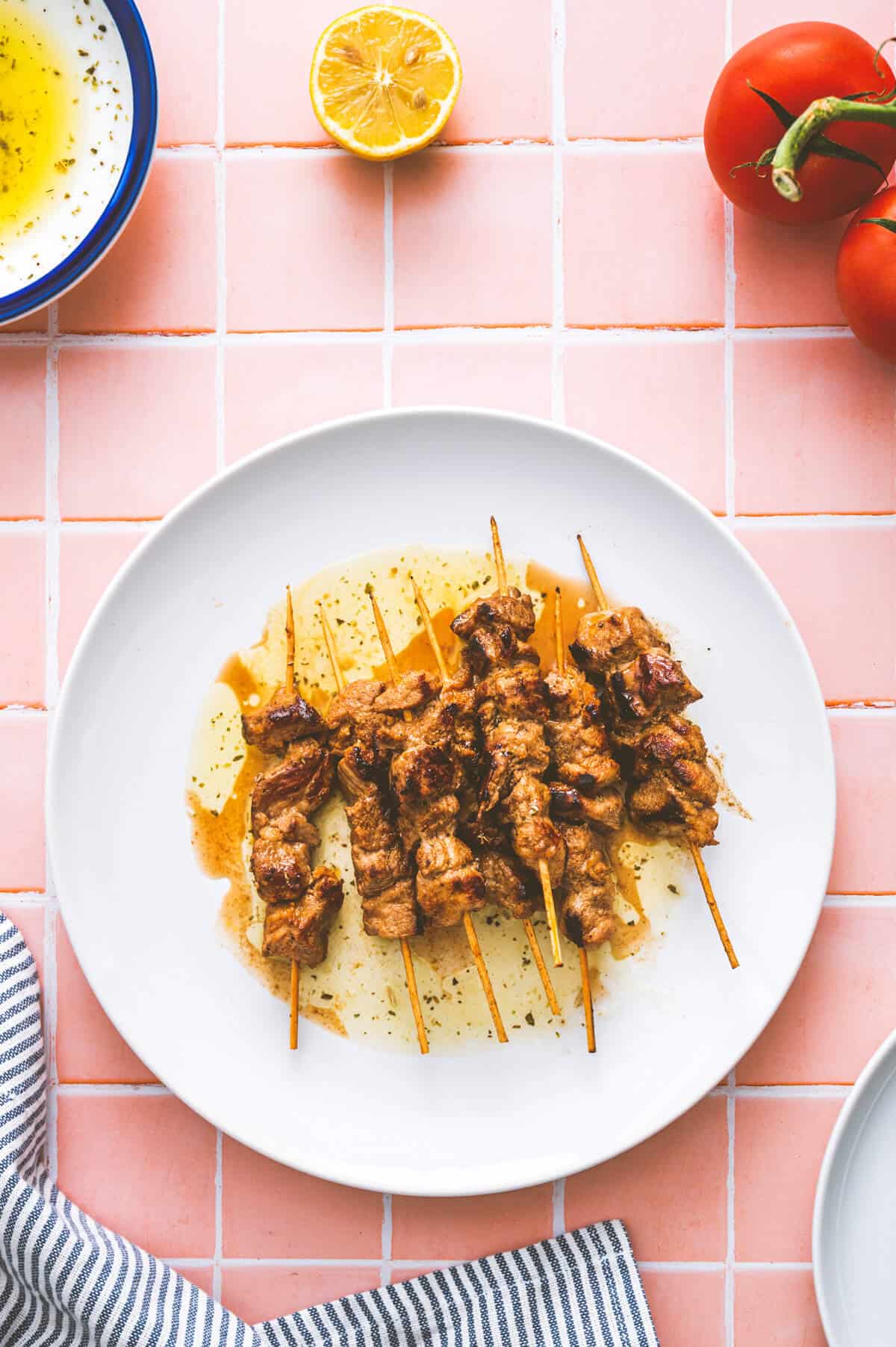
Table of Contents

Recipe Snapshot
- 💬 What it is: Greek pork souvlaki is marinated pork threaded onto skewers and grilled until juicy and lightly charred. It's a popular Greek street food that's equally at home on the barbecue or dinner table.
- ❤️ Why you'll love it: Easy to prepare, packed with flavour and perfect for entertaining. The marinade does most of the work, while the grill adds that classic smoky finish.
- 👨🍳 How to make it: Marinate the pork, thread it onto skewers and grill until cooked through and lightly charred. Serve with pita bread, tzatziki and ladolemono.
Why You'll Love This Recipe
- Easy to prepare: The souvlaki marinade comes together in minutes using simple pantry ingredients.
- Perfect for entertaining: The pork can be marinated ahead of time, making it ideal for barbecues, gatherings and relaxed weekend meals.
- Packed with flavour: A unique blend of spices, including fennel, creates tender, juicy pork with plenty of character.
- Versatile: Serve it with pita bread, tzatziki, Greek salad and ladolemono, or build your own souvlaki wraps.
- A taste of Greece at home: Whether cooked on an outdoor grill or indoor griddle pan, these pork skewers deliver the smoky, charred flavours that make souvlaki so irresistible.
Ingredients
What cut of pork is best for souvlaki?
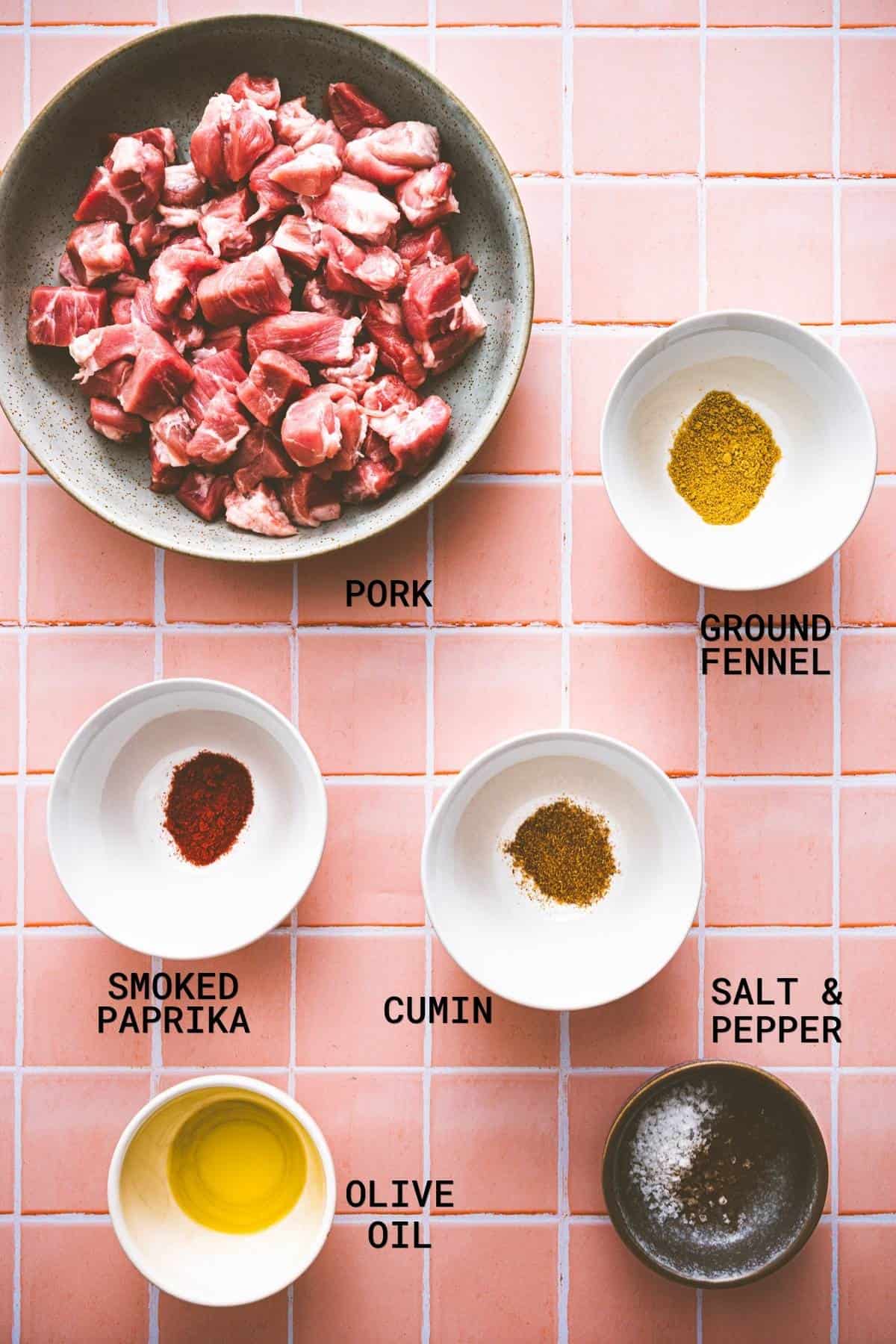
Pork neck: My preferred cut of meat for this recipe (sold as "pork scotch fillet" in Australia). They stay juicy on the grill and have plenty of flavour. You can try pork tenderloin and pork belly (fattier) as an alternative. Or be adventurous and use a combination of pork cuts! If you're in the US look for pork collar or pork collar butt. Pork shoulder is best for slow braises and I tend to skip it in this recipe.
- Smoked paprika: Adds a subtle smoky flavour and rich colour to the pork. It's especially useful if you're cooking indoors or using a grill pan rather than a barbecue.
- Ground fennel: My not-so-secret ingredient. It pairs beautifully with pork and adds a subtle savoury sweetness that always gets people asking what makes this souvlaki taste so good.
- Ground cumin: Adds warmth and depth to the marinade without overpowering the other flavours.
- Extra virgin olive oil: Helps carry the flavours of the marinade and keeps the pork moist while cooking.
- Red wine (not pictured): Optional, but it adds a subtle depth of flavour. This little trick came from my father.
- Sea salt and black pepper: Essential for seasoning the pork and bringing the marinade together.
How to Make Greek Pork Souvlaki
The full recipe and instructions are in the recipe card at the end of this post.
Prep the pork
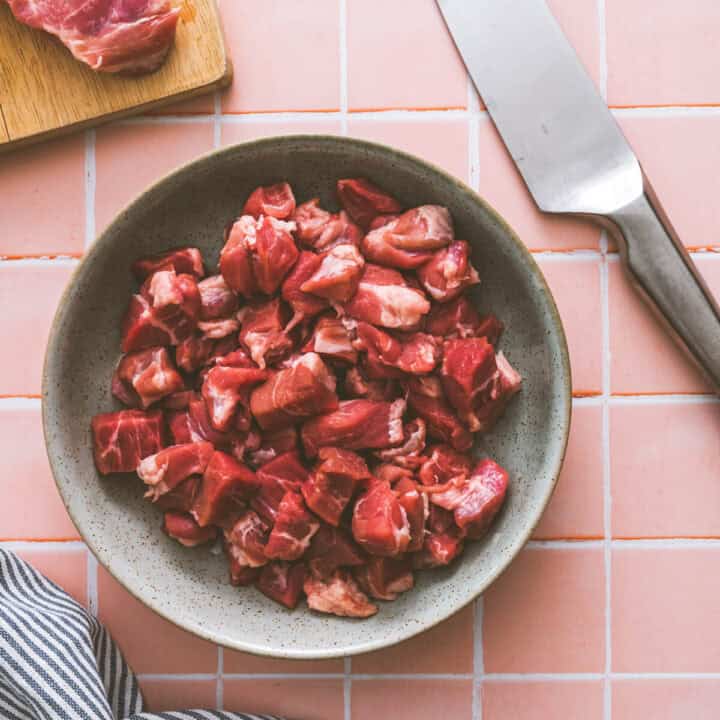
Cut the pork into even 2 cm or 1 inch cubes and place in a large bowl.
Make the souvlaki marinade
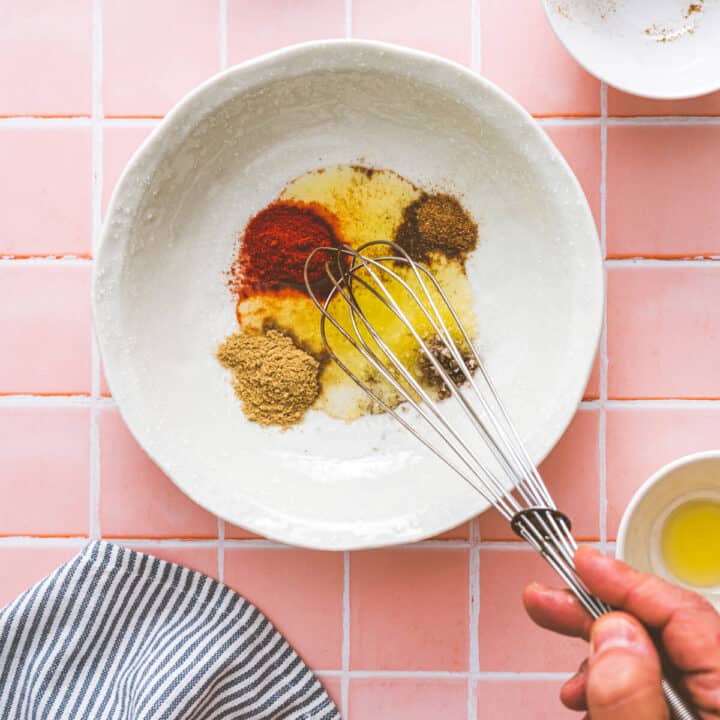
Whisk the olive oil, spices and seasonings together in a bowl.
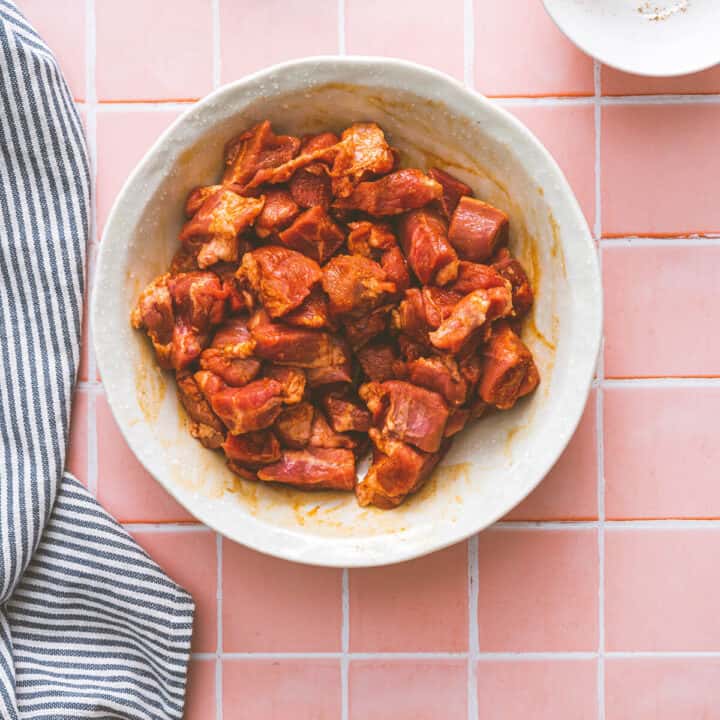
Marinate
Place pork cubes into the marinade and mix well, ensuring each piece is evenly coated.
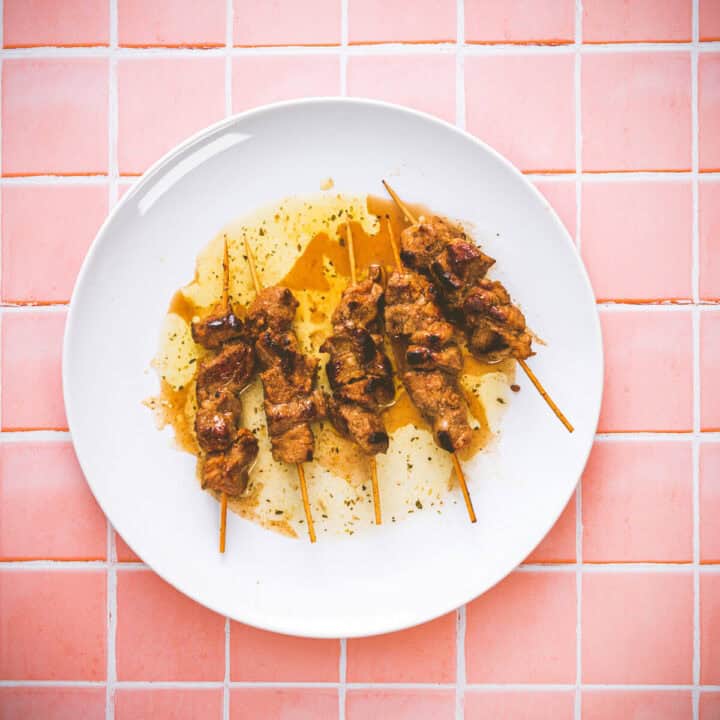
Skewer and cook
Thread the pork cubes onto wooden skewers and grill until lightly charred and cooked through. Serve with pita bread, tzatziki and ladolemono.
Peter's Tips
- Leave some space on the skewer: Avoid packing the pork too tightly. A little space between the pieces allows the heat to circulate and helps them cook more evenly.
- Choose the right cut: Pork necks are my favourite for this recipe, but pork loin and pork belly all work well - albeit - each will give slightly different results. Just remember - a little fat is actually good in this recipe.
- Don't skip the fennel: It might seem unusual, but fennel and pork are a natural pairing. Whenever I hold a bbq - it's the ingredient that always gets people asking what makes this souvlaki taste so good.
- Cut the pork evenly: Try to keep the pieces roughly the same size so they cook evenly on the grill.
- Soak your wooden skewers: If you're using bamboo skewers, soak them in water for a few hours before cooking to help prevent them from burning.
- The red wine is optional: A small amount adds subtle depth to the marinade. It's a trick I learned from my father and one I've continued to use over the years.
- Don't be afraid of the salt: Pork loves seasoning and the salt helps bring all the flavours of the marinade together.
Email This Recipe
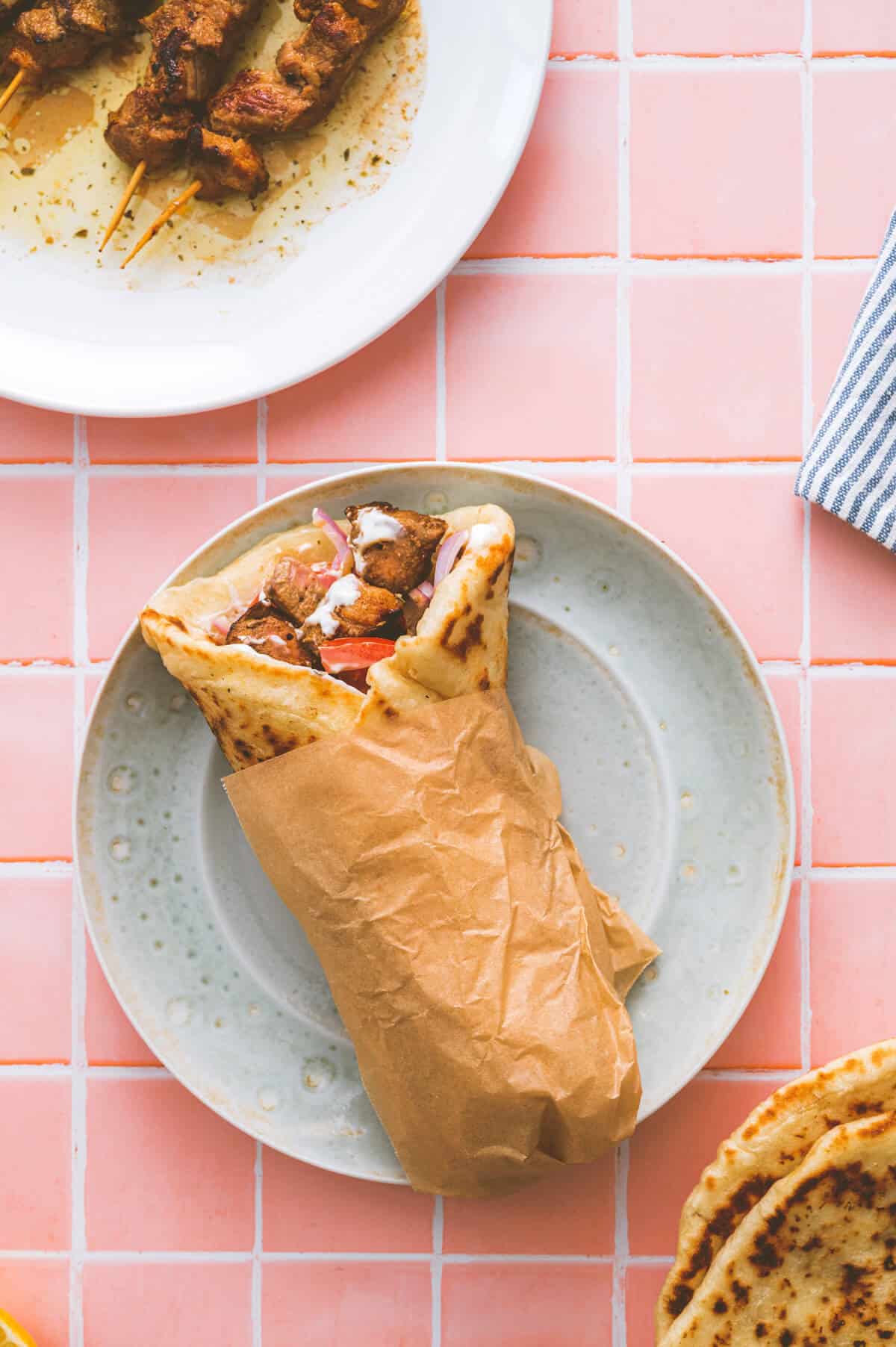
Serving Suggestions
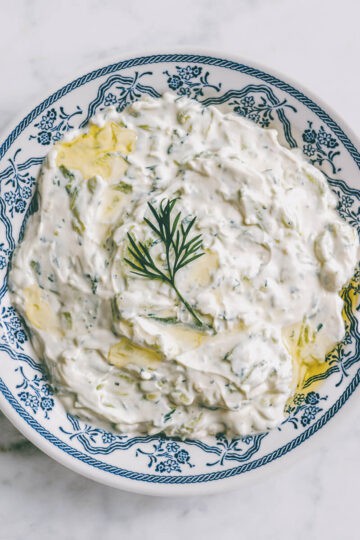
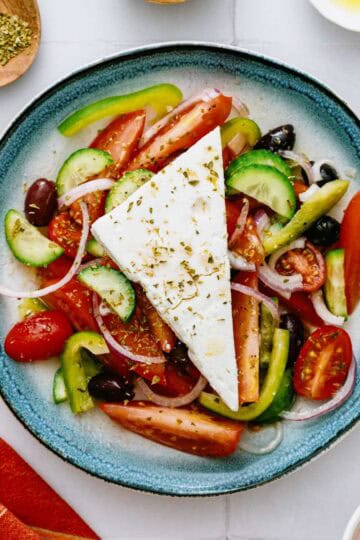
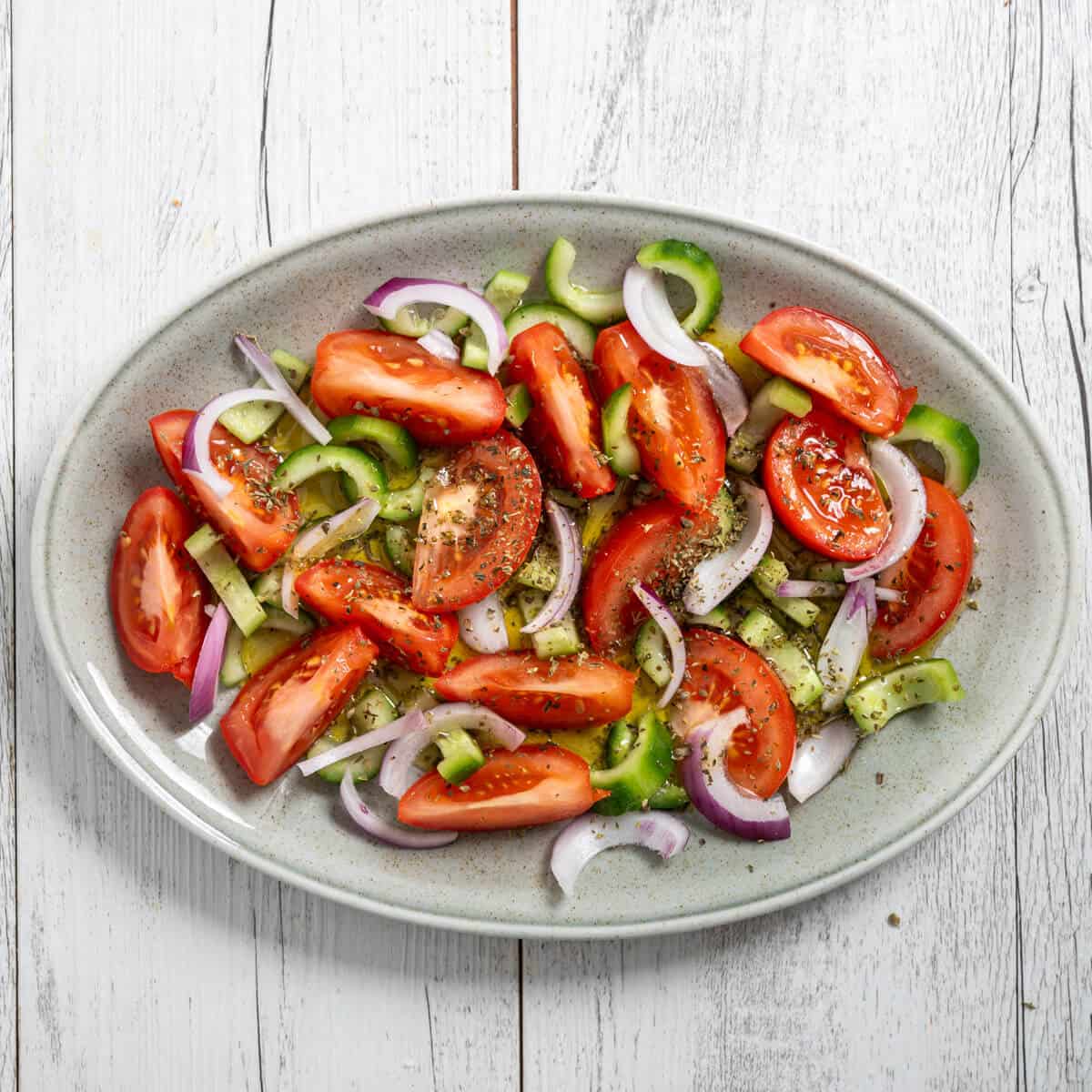
- For a classic Greek meal, serve the pork souvlaki with warm pita bread, homemade tzatziki and a generous drizzle of ladolemono (the famous Greek sauce made with olive oil, lemon juice and oregano). Add a Greek salad on the side and you've got an easy meal that's perfect for entertaining.
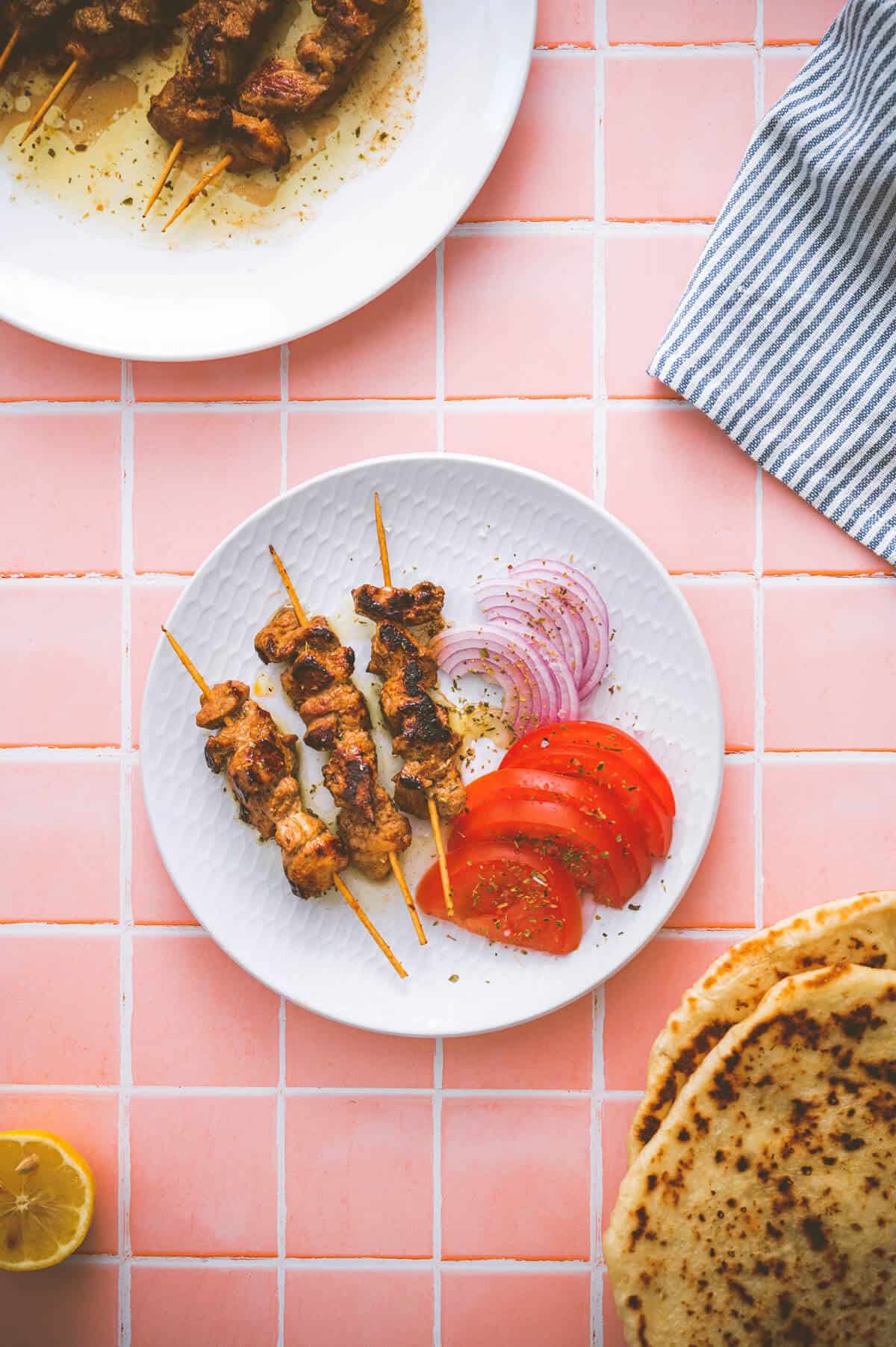
- You can also serve the pork straight from the skewers alongside rice, roasted potatoes or a simple village-style salad.
- For a more casual option, tuck the pork into warm pita bread with sliced tomato, red onion and tzatziki to make your own souvlaki wraps.
Storage & Reheating
- Store any leftover pork souvlaki in an airtight container in the refrigerator for up to 3 days.
- To reheat, place the pork in a preheated oven until warmed through. This helps maintain the texture and prevents the meat from drying out.
- While you can use a microwave, the oven will give the best results.


Enjoyed this recipe? Sign up to the Newsletter and follow along on Facebook, Instagram and Pinterest
📖 Recipe
Greek Pork Souvlaki
Conversions
Ingredients
- 500 g pork neck, cut into 2 cm (1-inch) pieces (Note 1)
- 1 teaspoon smoked paprika, (Note 2)
- 1 teaspoon ground fennel, (Note 3)
- ½ teaspoon ground cumin
- 1 tablespoon olive oil
- 1 tablespoon red wine, optional (Note 4)
- 1 tablespoon sea salt, (Note 5)
- 1 teaspoon ground black pepper
Instructions
- Cut the pork into even-sized pieces, approximately 2 cm (1 inch) in size. (Note 6)500 g pork neck cut into 2 cm (1-inch) pieces (Note 1)
- In a medium bowl, whisk together the smoked paprika, ground fennel, ground cumin, olive oil, red wine, sea salt and black pepper.1 tsp smoked paprika (Note 2), 1 tsp ground fennel (Note 3), ½ tsp ground cumin, 1 tbsp olive oil, 1 tbsp red wine optional (Note 4), 1 tbsp sea salt (Note 5), 1 tsp ground black pepper
- Add the pork to the marinade and mix well, ensuring each piece is evenly coated. Cover and refrigerate for at least 2 hours.
- Soak bamboo skewers in water for a few hours. Thread 4-5 pieces of pork onto each skewer, leaving a little space between the pieces for even cooking. (Notes 7 & 8)
- Preheat a barbecue grill or grill pan over medium-high heat. Cook the souvlaki for 5 minutes on one side, then turn and cook for a further 3-5 minutes, or until lightly charred and cooked through.
- Serve immediately with pita bread, tzatziki and ladolemono.
SAVE THIS RECIPE
Peter's Tips
- Pork necks (sold as "pork scotch fillet" in Australia) - are my preferred cut for this recipe, but pork loin (leaner) and pork belly (fattier) all work well. Or be adventurous and use a combination of pork cuts! If you're in the US look for pork collar or pork collar butt. Pork shoulder is best for slow braises.
- The smoked paprika adds a subtle smoky flavour and is especially useful if you're cooking indoors or using a grill pan.
- Don't skip the ground fennel. It pairs beautifully with pork and is the ingredient people always ask me about.
- The red wine is optional, but it adds a subtle depth of flavour to the marinade. This is a trick I learned from my father. While I often marinate the pork overnight when entertaining, I've tested this recipe with a shorter marinade and it still delivers plenty of flavour.
- Don't be afraid of the salt. Pork loves seasoning and it helps bring the flavours of the marinade together.
- Cut the pork into evenly sized pieces to ensure it cooks evenly.
- Soak bamboo skewers in water for a few hours before cooking to help prevent burning. The skewers I use are 15cm long or approx. 6".
- Leave a little space between the pieces of pork on the skewer to help them cook evenly.
Nutrition
This website provides approximate nutrition information for convenience and as a courtesy only. Nutrition data is gathered primarily from the USDA Food Composition Database, whenever available, or otherwise other online calculators.
© Souvlaki For the Soul
Made this recipe?
Rate and Comment below!This post was first published in January 2013 and was updated in June 2026 with new pics and information.

Christian A says
Definitely a great recipe - thank you for letting me try this Peter!