

Greek salad, known in Greece as horiatiki, is a staple of the summer table. Made with tomatoes, cucumber, capsicum, olives and feta, it's a simple salad that relies on the quality of its ingredients rather than a complicated dressing.
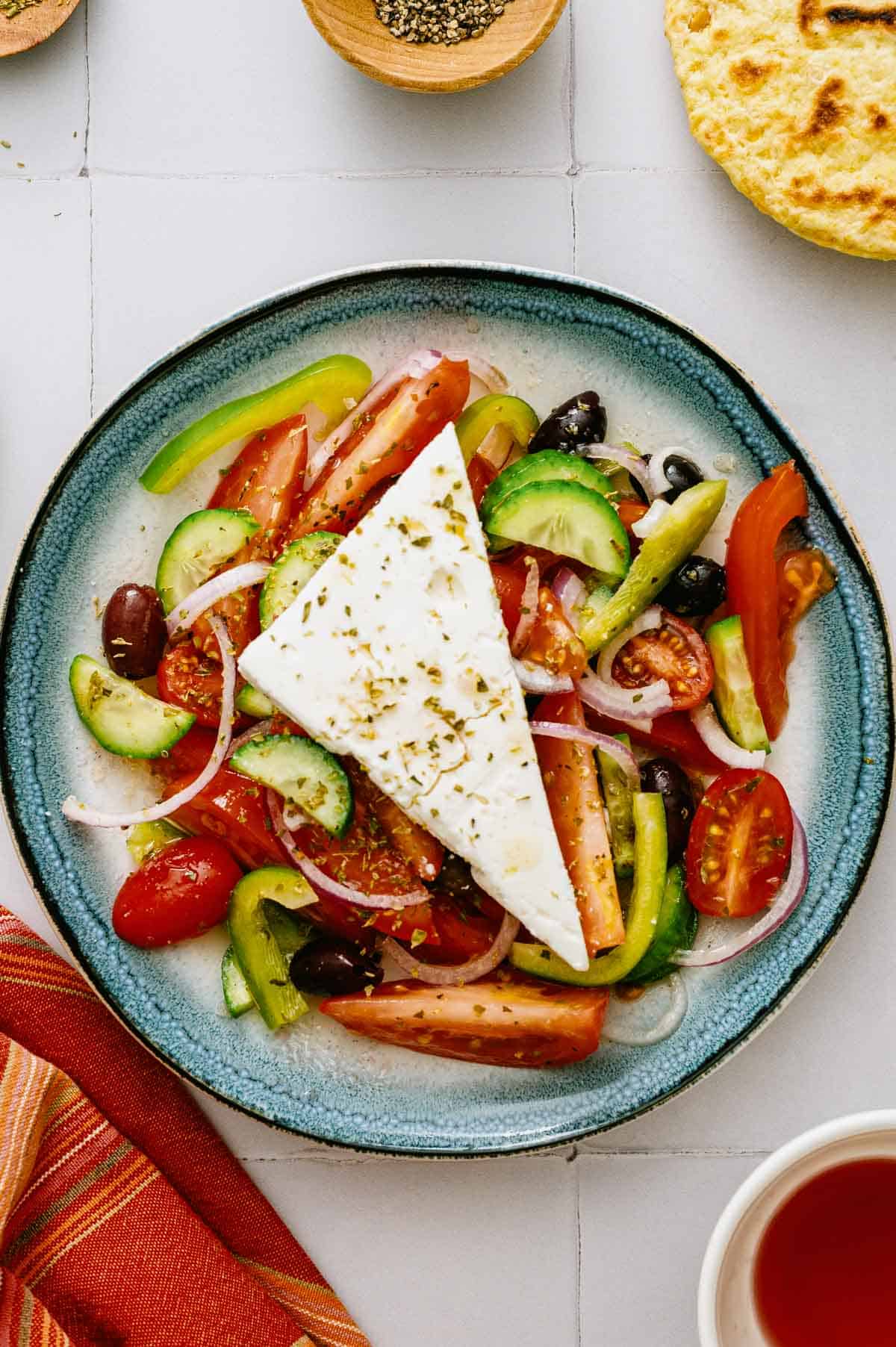
Table of Contents

Recipe Snapshot
- 🥗 What it is: A traditional Greek salad made with tomatoes, cucumber, capsicum, olives and feta, dressed simply with olive oil, red wine vinegar and oregano.
- ❤️ Why you'll love it: Fresh, colourful and ready in minutes. Unlike many versions, there's no lettuce to dilute the flavours of the vegetables.
- 👨🍳 How to make it: Chop the vegetables, add olives and feta, drizzle with olive oil, season and serve.
DID YOU KNOW
Horiatiki (χωριάτικη) translates roughly to "village salad". Greece has many regional salads, but the combination of tomatoes, cucumber, capsicum, olives and feta is the version most people recognise as Greek salad served throughout Greece today.
Ingredients at a Glance
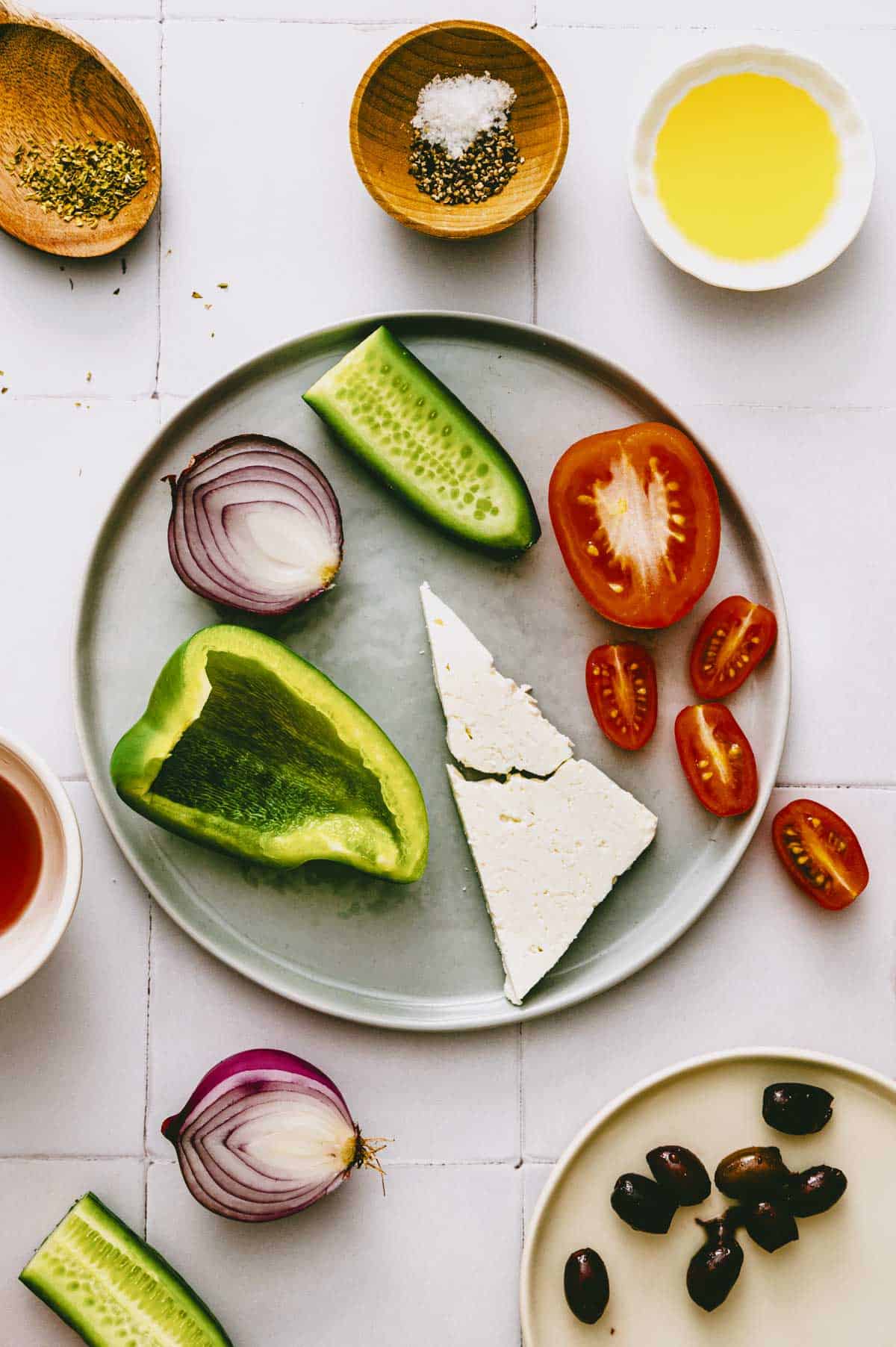
- Feta: Use Greek feta packed in brine if possible. Its creamy texture and tangy flavour make a noticeable difference in a simple salad like this.
- Tomatoes: Choose ripe, in-season tomatoes. This is one recipe where tomato quality really matters.
- Cucumber: I prefer Lebanese cucumbers (known as Persian cucumbers in the United States). They're crisp, slightly sweet and less watery than larger varieties.
- Kalamata Olives: Rich and fruity, Kalamata olives provide the distinctive flavour traditionally associated with Greek salad.
How to make Greek salad
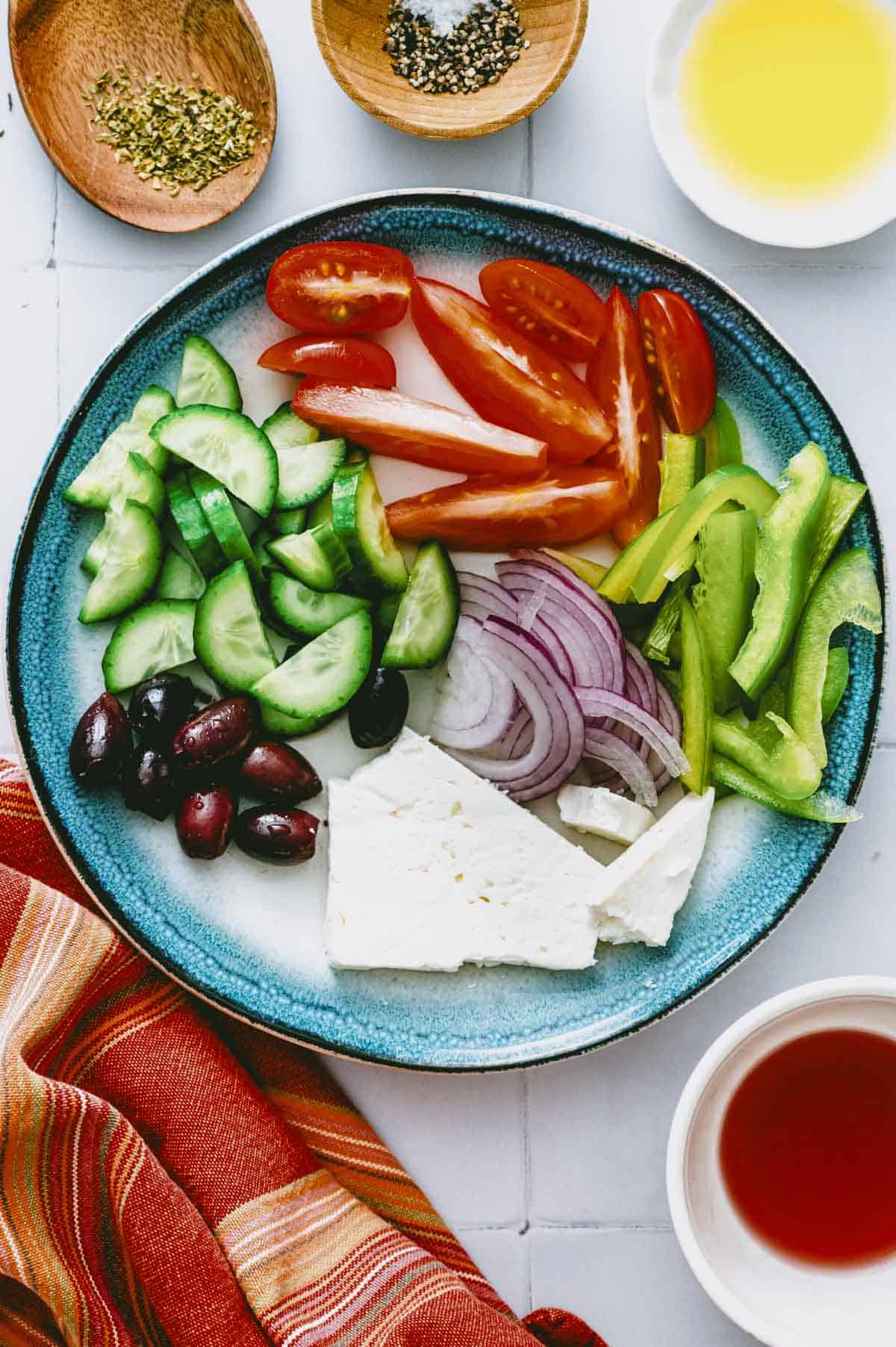
Prepare the ingredients: Slice the tomatoes, cucumber, capsicum and red onion, then set aside with the olives and feta.
Email This Recipe
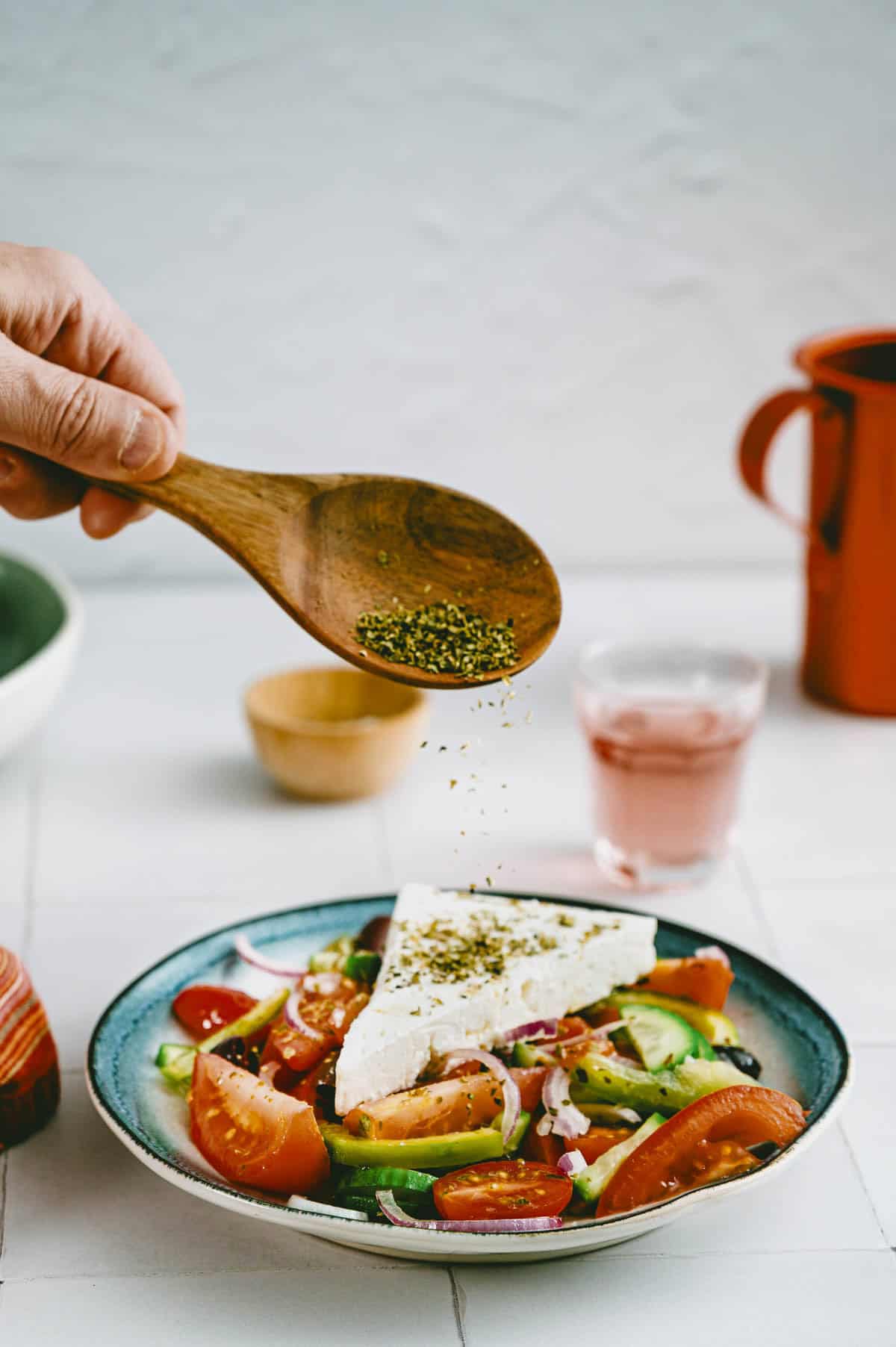
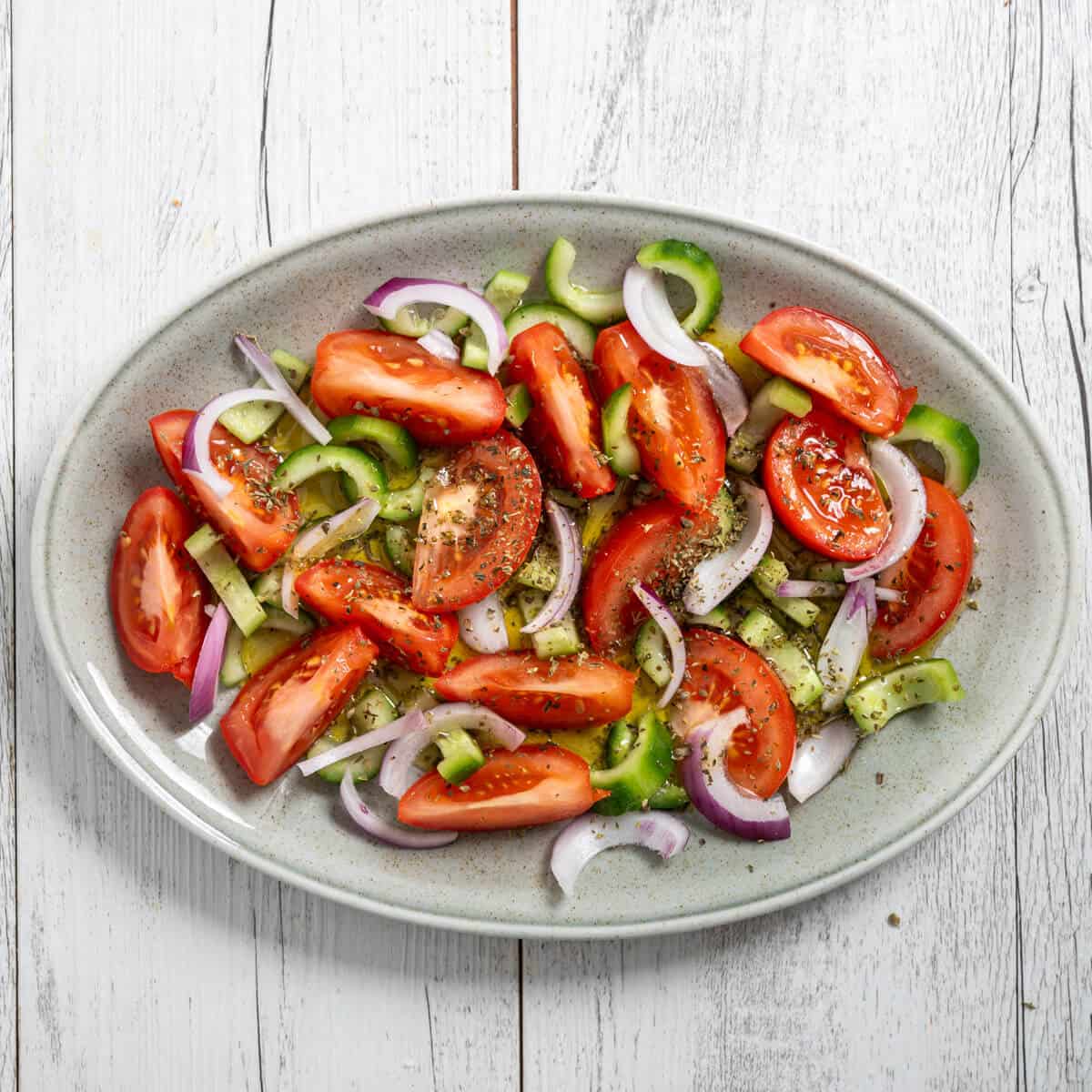
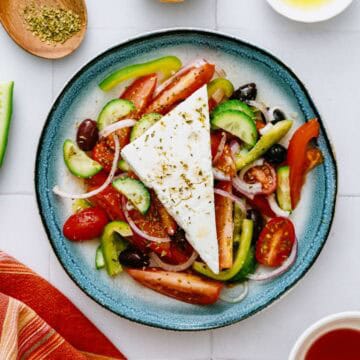
Assemble the salad: Arrange the vegetables and olives on a serving plate, top with feta, then drizzle with olive oil and red wine vinegar. Finish with oregano and a pinch of sea salt.
Peter's Tips
1. Use the best tomatoes you can find. This is one recipe where tomato quality makes a noticeable difference. Choose ripe, in-season tomatoes whenever possible.
2. Don't overdress the salad. The vegetables should be lightly coated rather than swimming in dressing. You can always add more olive oil or vinegar at the table.
3. Serve immediately. Horiatiki is best enjoyed fresh, while the vegetables are crisp and the feta holds its shape.
4. Leave the feta in larger pieces. Rather than crumbling it, place larger pieces or a slab of feta over the salad, as is commonly done in Greece.
What to Serve with Horiatiki
Horiatiki pairs beautifully with grilled meats, seafood and warm bread. Serve it alongside:
- Pork Souvlaki
- Biftekia (Greek Beef Patties)
- Greek Pita Bread
- Tzatziki
- Patates Sto Fourno (Greek Roast Potatoes)
For a simple summer meal, I often serve it with warm pita bread, tzatziki and grilled meat straight from the barbecue.
Enjoyed this recipe? Sign up to the Newsletter and follow along on Facebook, Instagram and Pinterest
📖 Recipe
Greek Salad (Horiatiki)
Conversions
Ingredients
- 4 ripe tomatoes, cut into wedges
- ½ green pepper, sliced thinly
- ¼ cucumber, sliced
- ½ red onion, sliced
- 6 Kalamata olives
- 100 g feta cheese, (cut into a thin triangle wedge)
FOR THE DRESSING:
- 60 ml olive oil, extra virgin
- 30 ml red wine vinegar
- 1 teaspoon oregano, Greek
- 1 pinch sea salt
Instructions
- Arrange the tomatoes, cucumber, capsicum and red onion on a serving platter or large bowl.
- Scatter over the Kalamata olives and top with the feta cheese.
- Sprinkle with the oregano. Whisk together the olive oil, red wine vinegar and sea salt, then drizzle over the salad. Serve immediately.
SAVE THIS RECIPE
Peter's Tips
- Use ripe, in-season tomatoes whenever possible. Their flavour makes a noticeable difference in a simple salad like this.
- I prefer Lebanese cucumbers (known as Persian cucumbers in the United States) for their crisp texture and mild flavour.
- Use Greek feta packed in brine if possible. For a more traditional presentation, leave the feta in larger pieces rather than crumbling it.
- Traditional horiatiki is usually made with green capsicum, though bullhorn peppers work beautifully as well.
- The salad is best served immediately after dressing, though you can always add a little extra olive oil or vinegar at the table.
Nutrition
This website provides approximate nutrition information for convenience and as a courtesy only. Nutrition data is gathered primarily from the USDA Food Composition Database, whenever available, or otherwise other online calculators.
© Souvlaki For the Soul
Made this recipe?
Rate and Comment below!This post was first published in February 2015 and was updated with new pics and information in June 2026.


Bernice AKA Betty Bake says
Your photos are gorgeous
The Fidgety Foodie says
It also drives me crazy when I see lettuce in horiatiki! If it ain't broke don't fix it ☺️
john | heneedsfood says
Just as I remember eating it in Greece - with a slab of feta weighing it all down. Yum!
Tori Cooper says
What a way to bring on the feta! This salad is calling my name with its beauty and deliciousness!
supal {chevrons & éclairs} says
Greek salad is my absolute favorite! Sweet and salty and tangy all in one. I love the idea of a bruschetta too... thank you so much for breaking it down for us 🙂 x
Millie | Add A Little says
Yum! One of my favourite simple, fresh salads!
AmandaChewTown says
Love the big slab of feta on top - Looks wonderful.
KimNB says
I see a lot of "authentic" recipes for the dressing also based on lemon juice or a mix of lemon and red wine vinegar. I believe Greek food uses lots of lemon but does it traditionally show up in the dressing?
Remon_Kewl says
Nope, as Peter writes here only vinegar is used.
Merryn Galluccio says
Simple is best and your father is perfectly right, it if isn't done properly then it is not alright. I love your plates, the Greek Salad looks delightful on top 😀
Simon @ the heart of food says
Ah, it has a proper name other than just "Greek". Have loved the salad and Dodoni feta since I was even a kid. Nice 🙂
Sara (Belly Rumbles) says
How could you not love an awesome Greek salad, done the right way, with a massive block of feta sitting on top.
Remon_Kewl says
There is a form of your bruschetta already here, ntakos from Crete. It uses barley paximadi as the base, and a lot cretan mizithra, which is sweeter than regular, instead of feta.
Xandrios says
Your bruschetta is actually very close to an existing, and awesome, recipe: Dakos! Generally without peppers and cucumber, but over the top delicious.
Cherylynn says
This salad is a plateful of awesomeness BUT then your little Greek bruschettas...I am giddy with excitement to try that out. You really have to do that as a separate recipe and I am betting it will go viral!
Peter G says
Thank you for your feedback. And that sounds like a great idea!
Sally Burke says
Absolutely don’t over dress the salad, in fact I prefer people to dress it themselves, but then I guess you don’t get all the flavours. I also note that you serve with a slice of feta which is what my sister started doing after a trip to Greece. Each to their own I guess. Anyway, there is nothing like a refreshing Greek salad.