

Greek pita bread is simple, but it's all about texture - soft, flexible, and made for wrapping. This is the style used in Greece for souvlaki and gyros, and one I come back to often for its simple dough, quick cooking, and reliably pillowy result.
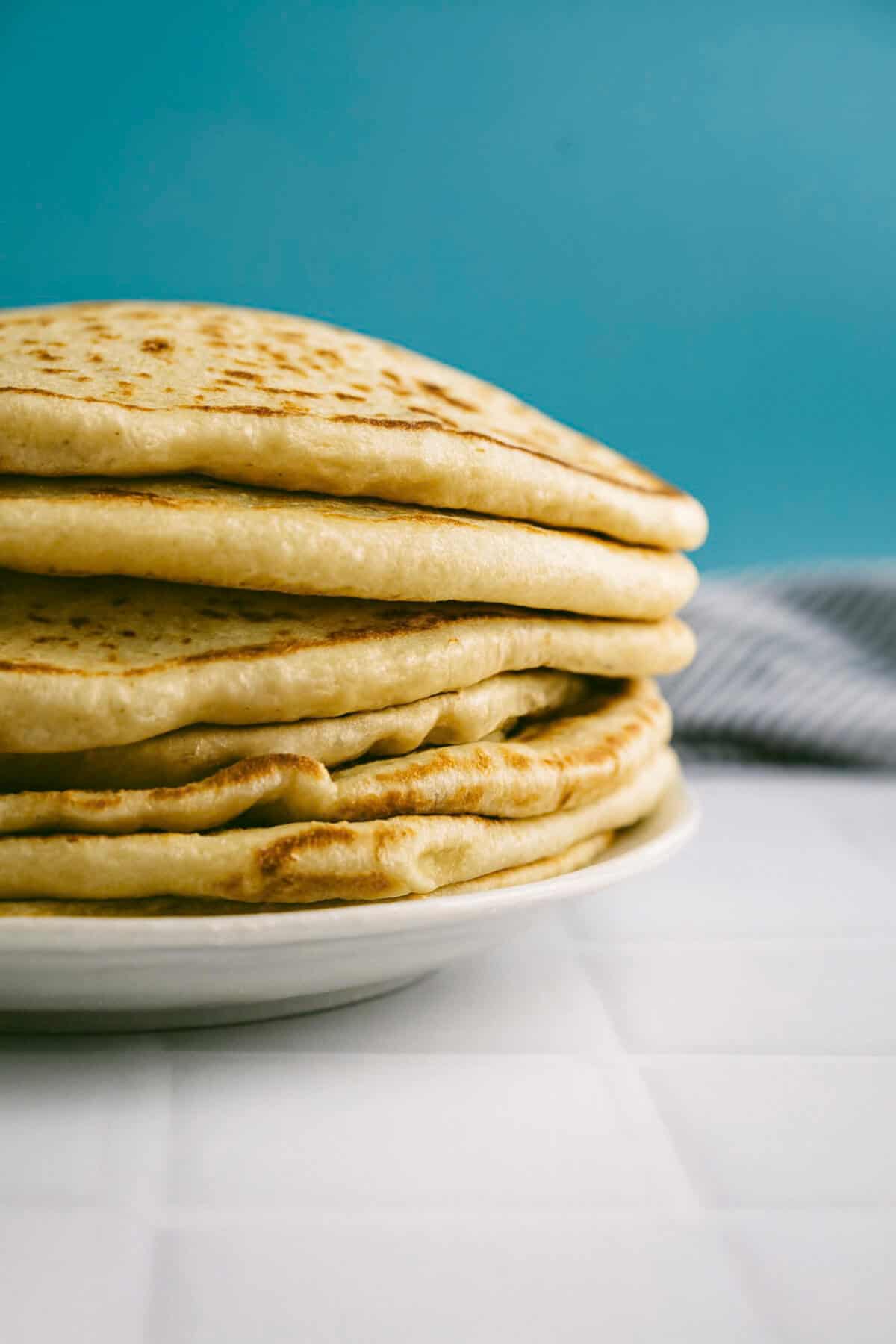
Table of Contents

Recipe Snapshot
- 💬 What it is: A traditional Greek pita bread that's soft, flexible, and made without a pocket - ideal for wrapping souvlaki and gyros.
- ❤️ Why you'll love it:
- Soft and pliable - perfect for wraps
- Made with simple, everyday ingredients
- Cooked in a pan - no oven needed
- Better than store-bought in both texture and flavour
- 👨🍳 How to make it: A simple yeast dough is mixed, rested, then divided and rolled into rounds before being cooked on a hot pan until soft, puffed, and lightly golden.
Why This Recipe Works
- The dough is soft and well-hydrated - giving you a tender, flexible pita that won't crack.
- Cooked on high heat - creates light puffing and those signature golden spots.
- No pocket by design - making it ideal for wrapping rather than stuffing
- Simple ingredient ratios - easy to work with and reliable every time
- Resting time is kept minimal - enough for softness without overcomplicating the process.
Ingredients
This is a simple, pantry-friendly dough using everyday ingredients.
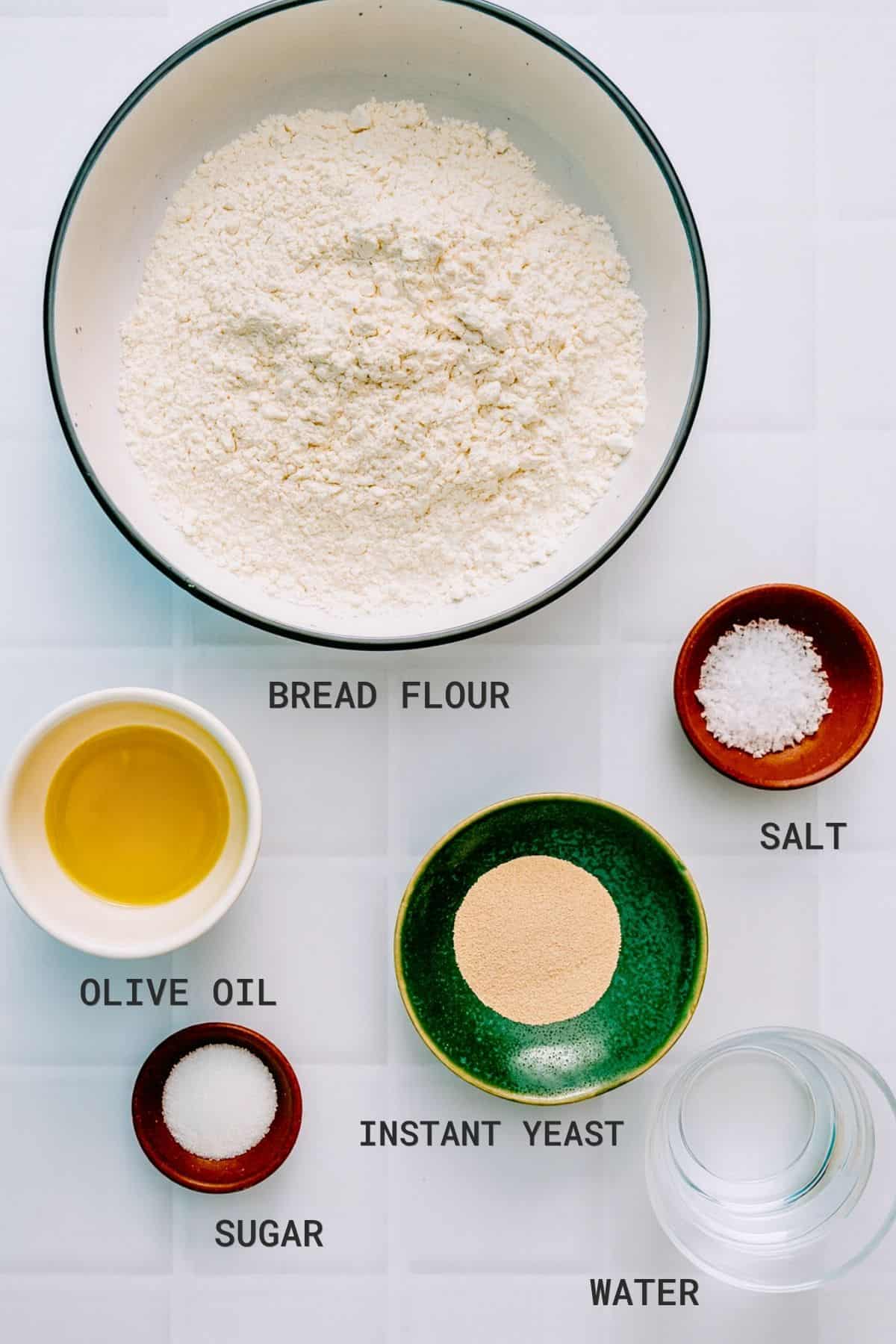
- Strong bread flour: Gives the pita structure and chew - plain flour works too, just slightly softer.
- Instant yeast: Helps the dough rise and creates a light, airy texture
- Sugar: Feeds the yeast and helps kickstart the rise
- Salt: Essential for flavour and balance
- Olive oil: Adds softness and a subtle richness to the dough.
- Warm water: Brings everything together into a soft dough - add a little extra if needed
How to Make Greek Pita Bread - Quick Overview
For the full Greek pita bread recipe please the recipe card below
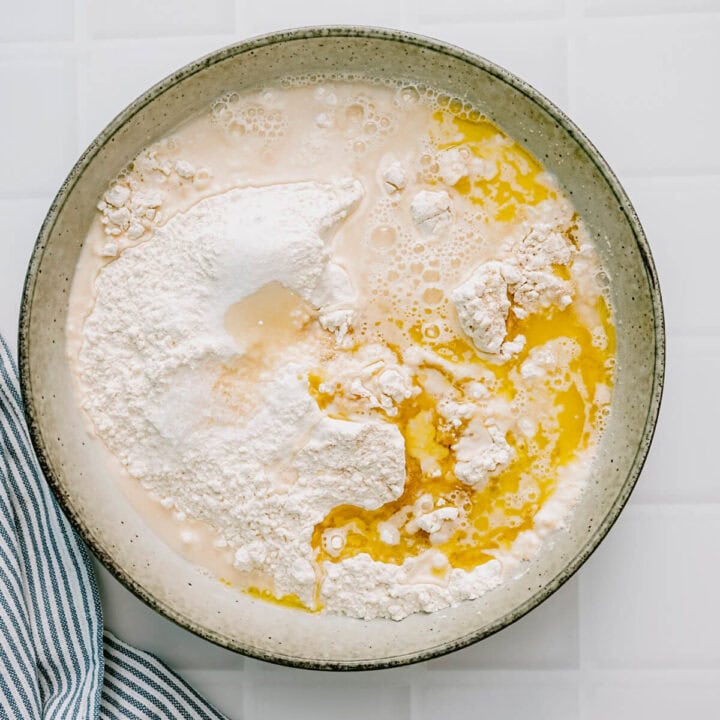
Make the dough:
Combine flour, salt, yeast, olive oil, and warm water until a soft dough forms.
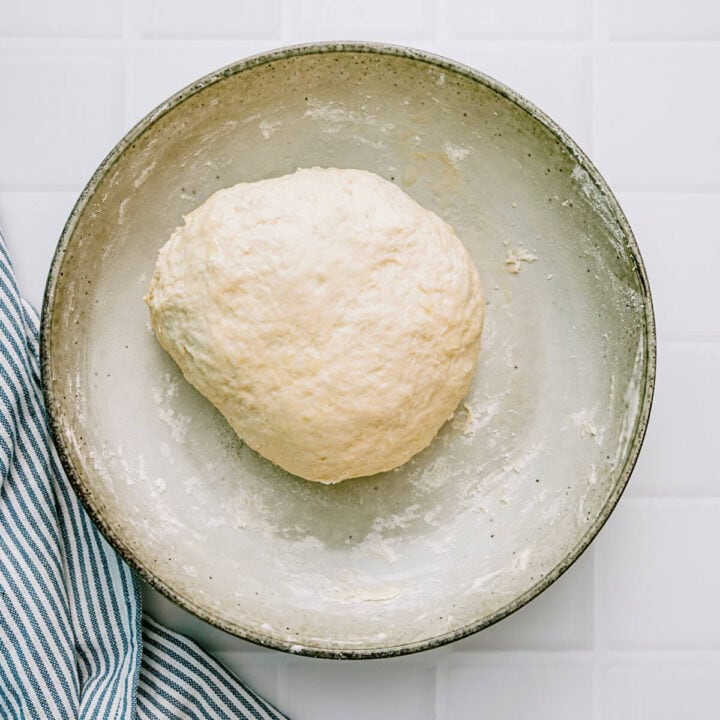
Knead and rise:
Knead until smooth and elastic, then place in an oiled bowl and let it rise until doubled in size (about 1-1.5 hours).
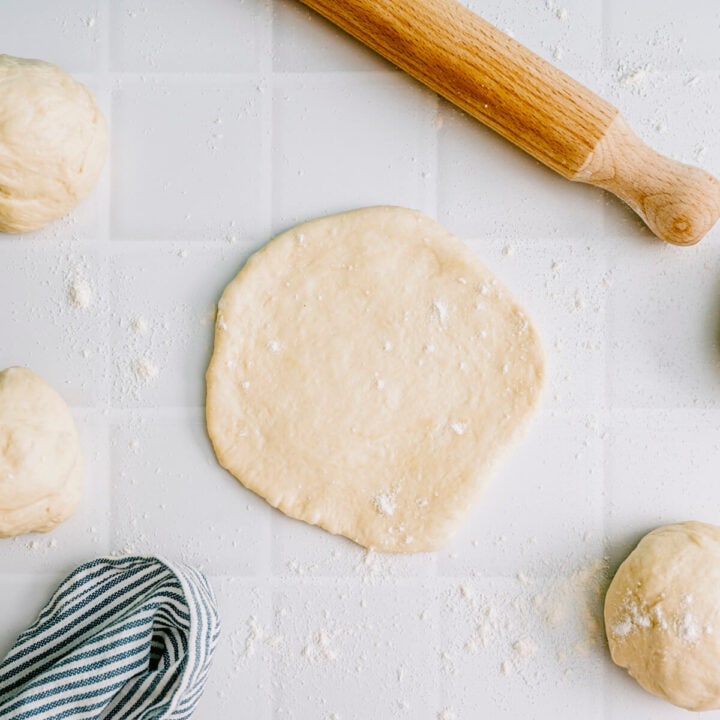
Shape the pitas:
Divide into 6-8 balls, then roll each into rounds about 18 cm wide and 5-6 mm thick.
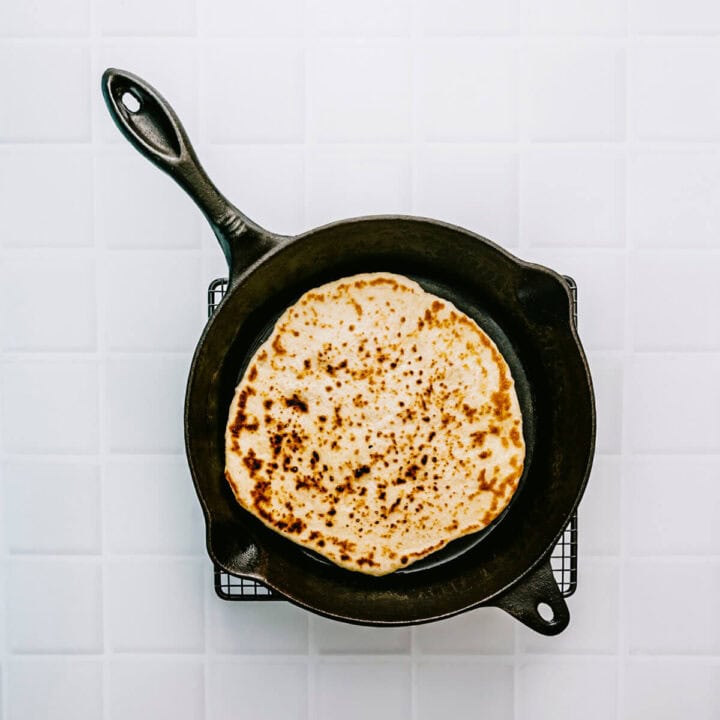
Cook and rest:
Cook in a hot pan until puffed and lightly golden, then stack and wrap in a towel to keep soft.

👉 Variations (and a few ways to adapt it)
- Greek yogurt pita: Add a little yogurt to the dough for extra softness and a slightly richer flavour - see my easy Greek yogurt flatbread for more options.
- Wholemeal option: Replace up to half the flour with wholemeal for a nuttier, more rustic texture
- Gluten-free / alternative flours: For a different approach, try a buckwheat-based version of pita.
- Chickpea option: Yes! I went there! Actual chickpeas pressed into the dough - my chickpea flatbreads are unique.
Email This Recipe
Expert Tips
- Use a hot pan - this is what gives you the light puffing and those golden spots.
- Don't roll too thin - slightly thicker dough keeps the pita soft and flexible.
- Keep them covered - stack and wrap in a towel as they cook to stop them drying out
- Adjust water as needed - the dough should feel soft and slightly tacky, not dry.
- Cook one as a tester - it helps you dial in the heat before committing to the rest.
- A light brush of olive oil after cooking adds softness and flavour.
Storing, Freezing & Reheating
- Room temperature: Store in an airtight bag or container for up to 2 days
- Fridge: Keep up to 4-5 days, but reheat before serving to restore softness
- Freezer: Freeze with baking paper between each pita for up to 2 months
To reheat:
Warm in a dry pan or wrap in foil and heat gently in the oven until soft and pliable.
Serving Suggestions
- Wrap it around grilled meats like souvlaki or gyros for a classic Greek-style meal
- Serve warm with dips like tzatziki, melitzanosalata, or htipiti.
- Use it as a base for simple wraps with tomato, onion, and a drizzle of olive oil.
- Tear and serve alongside grilled meats or seafood as part of a shared spread.
- Lightly toast and use for dipping into sauces or juices from roasted dishes
FAQ
No - Greek pita is soft and flat with no pocket, making it ideal for wraps. Regular (Middle Eastern) pita is designed to puff and split open.
A hot pan is key. If the heat is too low or the dough is rolled too thin, you won't get that light puffing or those golden spots.
Yes, you can prepare the dough and refrigerate it after the first rise. Let it come back to room temperature before shaping and cooking.
Yes - once cooked and cooled, freeze with baking paper between each pita. Reheat in a pan or in the oven to restore softness.
You can - the pita will still work well, just slightly softer and less chewy than with bread flour.
Stack and wrap them in a clean towel as they come off the pan. This traps steam, keeping them soft and flexible.
More Pita Bread Recipes
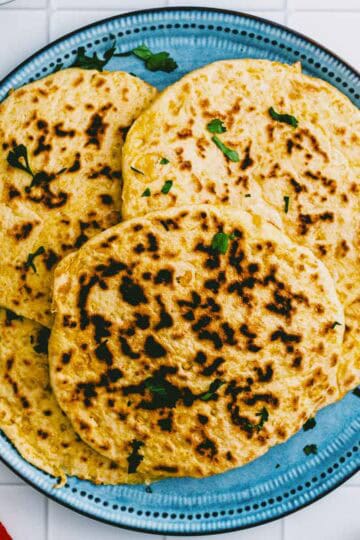
Enjoyed this recipe? Sign up to the Newsletter and follow along on Facebook, Instagram and Pinterest
📖 Recipe
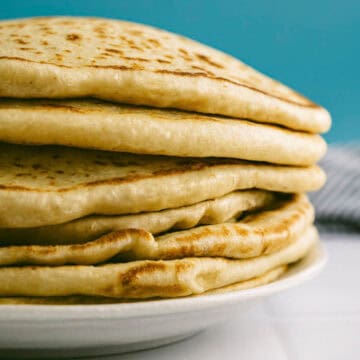
Greek Pita Bread
Video
Conversions
Ingredients
- 500 g bread flour , (or plain flour if that's all you have)
- 7 g instant yeast
- 1 teaspoon sugar, to feed the yeast
- 1 ½ teaspoon salt
- 2 tablespoon olive oil
- 300 ml water, warm - plus a splash more if dough feels dry
Instructions
- Make the dough: In a large bowl, combine flour, salt, sugar, and yeast. Add olive oil and warm water, then mix until a soft dough forms.500 g bread flour (or plain flour if that's all you have), 7 g instant yeast, 1 tsp sugar to feed the yeast, 1 ½ tsp salt, 2 tbsp olive oil, 300 ml water warm - plus a splash more if dough feels dry
- Knead and rest: Knead for 8-10 minutes until smooth and elastic. Place in a lightly oiled bowl, cover, and let rise until doubled in size (about 1-1.5 hours).
- Divide and shape: Turn the dough onto a floured surface and divide into 6 pieces. Roll each piece into a round about 18-20 cm (approx. 8inches) wide and 5-6 mm thick.
- Cook: Heat a pan or cast-iron skillet over medium-high heat and add a splash of oil. Cook each pita for 1-2 minutes per side until puffed and lightly golden.
- Keep warm: Stack cooked pitas and wrap in a clean towel to keep soft.
SAVE THIS RECIPE
Peter's Tips
- The dough should feel soft and slightly tacky - add a little extra water if needed
- A hot pan is key for puffing and those golden spots
- Don't roll too thin - thicker dough keeps the pita soft and flexible
- Wrap in a towel straight after cooking to trap steam and maintain softness
- A light brush of olive oil after cooking adds extra flavour
Storage
- Store at room temperature in an airtight container for up to 2 days
- Refrigerate for up to 5 days (reheat before serving)
- Freeze with baking paper between each pita for up to 2 months
Nutrition
This website provides approximate nutrition information for convenience and as a courtesy only. Nutrition data is gathered primarily from the USDA Food Composition Database, whenever available, or otherwise other online calculators.
© Souvlaki For the Soul

Peter G says
Enjoy this easy recipe for traditional Greek Pita Bread! Perfect for souvlaki and dipping.