
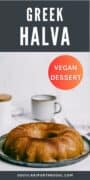
You will love this delicious, traditional Greek halva recipe if you have a sweet tooth! This semolina pudding is delicate and bold, known for its rich, nutty flavour and texture. The best part? There is no baking required!

CONTENTS
What is halva?
Halvas (Χαλβάς) has many variations in Greece.
Sesame halva: this version uses tahini (crushed sesame seeds), sugar or honey. This delightful treat has a crumbly texture and sometimes features chocolate and nuts.
Halvas Farsalon: this unique halva is made with corn starch and caramel syrup and resembles more of a jelly. It hails from Farsala in Central Greece and is a much-prized local delicacy.
Macedonian halva: this is another tahini-based version flavoured with honey and nuts.
Semolina Halva: this is the recipe I'm showcasing on my recipe site. It's a simple dessert made using semolina flour, oil, sugar and water. This halva is also the most well-known in Greece and is prepared by many in their homes.
Halva is also traditionally served on the first day of Greek Orthodox Lent (Clean Monday), along with taramasalata and lagana.
However, feel free to make those recipes any time of the year - I do!

Halva history
It's worth noting that although halva is popular and famous in Greek culture, you can't deny that its history takes inspiration and influence from other cultures - namely, the Ottoman occupation of Greece.
Halva also features heavily in the Balkan regions, Turkey, the Middle East and India. There are enough versions of this dessert to go around!
Why this recipe works
- It's simple! Trust me when I tell you this! In Greece, Greek halva is known as "1:2:3:4" - because the recipe calls for one part oil, two parts semolina, three parts sugar, and four parts water. These are humble ingredients and reflect the simplicity of this dish.
- It's comforting. Yep! A slice of this will make everything feel better! It's a decadent and satisfying pudding-like dessert like no other! Plus, you won't be able to resist its delicious taste!
- It's naturally vegan. If you follow a vegan diet - you're going to love this!
- It's effortless. Greek halva requires no baking and is an excellent addition to any menu. (There is a little stirring to achieve the best results!).
Ingredients and substitutions

Semolina
For this Greek halva recipe, I'm using semolina. Semolina is a type of coarse wheat flour and features in many Greek desserts (try my galatopita - for the ultimate creamy dessert).
I prefer coarse semolina because it provides a toothy texture to the final dish. However, you can use a combination of fine semolina to balance things out or to make a smoother type of halva.
Sugar
Regular, granulated sugar is perfect for this recipe. (This is what I use to make the sugar syrup).
You can also use caster sugar (superfine sugar) if you prefer.
I have experimented using brown sugar - see my "modern version" of halva served with rhubarb.
Honey is another delicious ingredient that you can also add to the syrup.
Oil
I like combining Greek extra virgin olive oil and sunflower oil.
However, using only olive oil is heavy on the palate. Combining it with another neutral oil keeps the halva lighter in taste.
Vegetable oil is also popular, but I'm not a fan.
For a more decadent indulgence, you could substitute with butter.
Flavours and spices
You can add a variety of spices to halva to enhance its taste.
Traditional ingredients include cinnamon, cloves, and orange peel.
Additional ingredients include other spices like cardamom and vanilla can be incorporated, offering a unique twist to this classic Greek dessert.
Nuts and dried fruit
Nuts and seeds are often incorporated into Greek halva, providing flavour and texture.
I'm using slivered almonds but feel free to mix things up. For example, try using pine nuts, walnuts, pistachios, sunflower seeds, or sesame seeds. Mix these ingredients into the semolina base or use them as a garnish.
You may also use raisins, currants, craisins or dried cranberries.
How to make Greek semolina halva
Prepare the syrup

Combine the sugar, water, orange peel, and cinnamon sticks in a small saucepan over medium-high heat.

Allow the syrup to boil, lower the heat, stir, and leave it to cook for about 10 minutes. Remove the hot syrup and allow it to cool.
Cooking the semolina

Heat the sunflower and olive oil over a medium high heat in a large deep pot.

Add the semolina to the heated oil.

Once you add the semolina the mixture will begin to bubble immediately.

Using a wooden spoon, stir continuously until the semolina is golden brown (this can take up to ten minutes).
👨🍳 It's essential to keep stirring and not leave the mixture alone. But, be careful as it may burn, causing the halva to ruin.
Making the halva

Once the semolina is golden brown, remove it from the heat and slowly add the cooled sugar syrup (be careful of any splattering).

Place the pot back on the heat and stir until the halva becomes thick and pulls away from the pot's sides. (This can also take up to 10 minutes!). Finally stir in the almonds.
Molding and serving

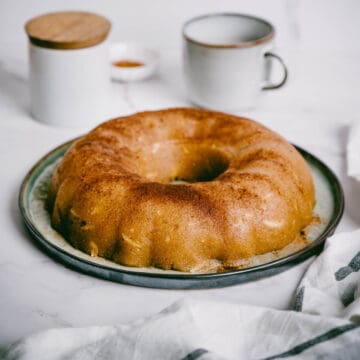
Add the halva pudding to a pre-greased bundt pan and smooth the top using an offset or baking spatula

Allow the mixture to cool before firming it in the refrigerator for an hour. When ready to serve dust the Greek halva with ground cinnamon.
Expert Tips
- Use a combination of fine and coarse semolina for best results.
- Add a ¼ cup of honey to the sugar syrup to elevate the flavours.
- Try not to stir the sugar syrup once it boils and then simmers. (This causes crystals to form and makes the syrup grainy).
- Do not overcook the semolina in the oil. It will burn and not have a pleasant taste at all.
- ❗️BE VERY CAREFUL when pouring the sugar syrup into the hot, toasted semolina. The mixture will splatter and bubble very quickly initially.
- If you don't have a bundt pan - try a loaf or cake tin. If the mold is heat resistant, the halva will firm up and be easier to slice when cooled.
- You can also serve the Greek halva in individual cups if you prefer (plus it's a lot easier!).
Serving Suggestions
Serve the Greek halva with whipped cream, Greek yogurt or a dollop of ice cream. Alternatively, try it with some of my rhubarb compote - delicious!
Storing
Store the halva in an airtight container in the refrigerator for up to a week.
Recipe FAQs
Yes. In Greece it is commonly served in restaurants, homes, and the start of Greek Lent known as "Clean Monday".
No, the recipe does not require any eggs.
Yes, it's best to let it cool before serving. Then, you can refrigerate it for a few hours to improve the texture.

Video
More delicious Greek sweets
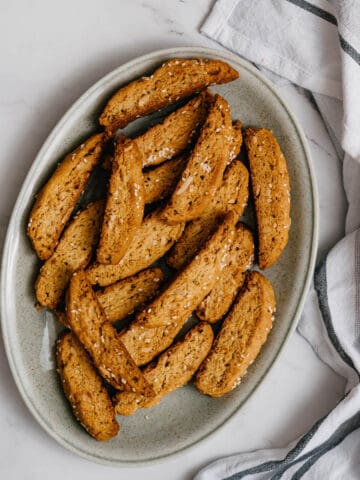
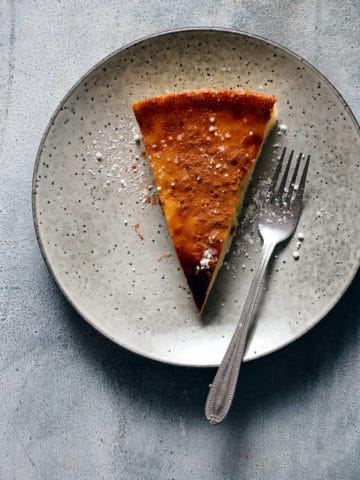
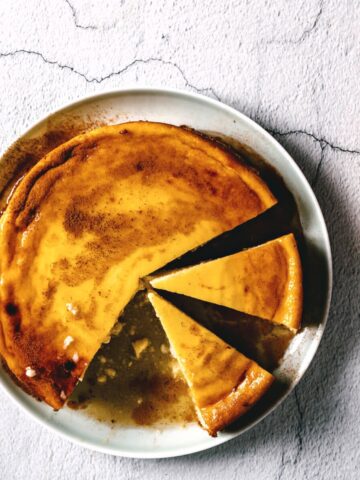
If you've made this recipe or any other recipe on the blog - don't forget to rate it and leave a comment below. You can also follow the blog on Facebook, Instagram and Pinterest OR sign up to the Newsletter for the latest delicious recipes.
📋 Recipe
Greek Halva Recipe (Semolina Pudding)
Ingredients
- 1 litre water
- 600 grams granulated sugar
- 1 orange peel
- 2 cinnamon sticks
- 125 ml olive oil
- 125 ml sunflower oil
- 350 grams semolina , coarse
- 75 grams slivered almonds
- 1 teaspoon ground cinnamon
Instructions
- Combine the sugar, water, orange peel, and cinnamon sticks in a small saucepan over medium-high heat.1 litre water, 600 grams granulated sugar, 1 orange peel, 2 cinnamon sticks
- Allow the syrup to boil, lower the heat, stir, and leave it to cook for about 10 minutes. Remove the hot syrup and allow it to cool.
- Heat the sunflower and olive oil over a medium high heat in a large deep pot.125 ml olive oil, 125 ml sunflower oil
- Add the semolina to the heated oil. (Once you add the semolina the mixture will begin to bubble immediately).350 grams semolina
- Using a wooden spoon, stir continuously until the semolina is golden brown (this can take up to ten minutes).
- Once the semolina is golden brown, remove it from the heat and slowly add the cooled sugar syrup (be careful of any splattering).
- Place the pot back on the heat and stir until the halva becomes thick and pulls away from the pot's sides. (This can also take up to 10 minutes!).
- Finally stir in the almonds.75 grams slivered almonds
- Add the halva pudding to a pre-greased bundt pan (measuring 25cm or 10") and smooth the top using an offset or baking spatula.
- Allow the mixture to cool before placing it in the refrigerator, to firm up for an hour. When ready to serve dust with ground cinnamon.1 teaspoon ground cinnamon
Notes
- Use a combination of fine and coarse semolina for best results.
- Add a ¼ cup of honey to the sugar syrup to elevate the flavours.
- Try not to stir the sugar syrup once it boils and then simmers. (This causes crystals to form and makes the syrup grainy).
- Do not overcook the semolina in the oil. It will burn and not have a pleasant taste at all.
- BE VERY CAREFUL when pouring the sugar syrup into the hot, toasted semolina. The mixture will splatter and bubble very quickly initially.
- If you don't have a bundt pan - try a loaf or cake tin. If the mold is heat resistant, the halva will firm up and be easier to slice when cooled.
- You can also serve this dessert in individual cups if you prefer (plus it's a lot easier!).
Nutrition
This website provides approximate nutrition information for convenience and as a courtesy only. Nutrition data is gathered primarily from the USDA Food Composition Database, whenever available, or otherwise other online calculators.
© Souvlaki For the Soul
This post was first published in August 2008 but was updated with new information and pictures in May 2023.
lefty's near Clements Circle in Livonia, MI
Definitely, what a splendid blog and instructive posts, I definitely will bookmark your blog.Have an awsome day!