

Greeks don't need much to make a great meal - and briam is proof. Potatoes, zucchini, onion and tomato slow-roasted in good olive oil until tender and deeply savoury. This is how you prepare Greek roasted vegetables: simple, satisfying, and one of those dishes I genuinely feel sorry for people who haven't tried yet.
★★★★★
"I made this recipe... The potatoes added a very nice touch, and soaked up all the garlicky tomato juices. Very easy, healthy and so delicious. Thanks Peter!" - FIONA
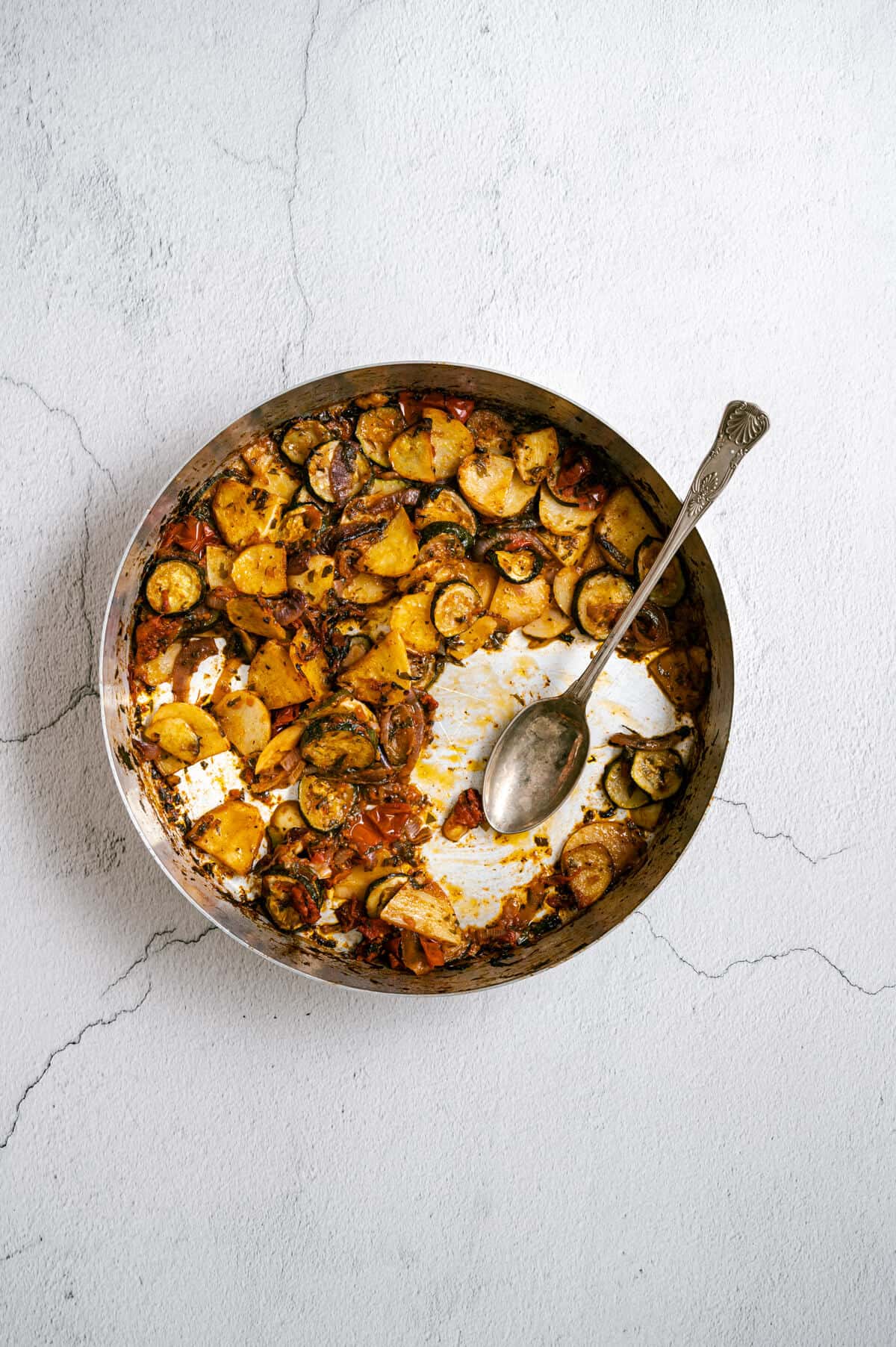
Table of Contents

Recipe Snapshot
- 💬 What it is: Briam is a traditional Greek baked vegetable dish - potatoes, zucchini, onion and tomato slow-roasted in generous amounts of olive oil. It belongs to a whole category of Greek cooking called ladera: vegetables cooked in oil, eaten as a main meal.
- 🇬🇷 What makes it Greek: Unlike other roasted vegetable dishes, briam is defined by its olive oil - not a light drizzle, but a generous pour. The tomatoes break down into a sauce that the vegetables slowly absorb. The result is deeply savoury and completely satisfying.
- 👨🍳 How to make it: Slice, toss with olive oil, tomato, garlic and parsley, then roast low and slow.
- ✅ Why it works: One pan, no fuss, naturally vegan - and it tastes better the next day.
What makes Greek briam different?
- Briam is a ladera dish - vegetables cooked in generous olive oil and eaten as a main meal. A cornerstone of Greek cooking.
- The olive oil isn't optional. Unlike other roasted vegetable dishes, the olive oil here combines with the tomato to create a sauce the vegetables slowly absorb. Don't be tempted to reduce it.
- The name has a history. Briam (also spelled briami) comes from the Turkish türlü, a reflection of the long culinary overlap between Greek and Ottoman cooking. In some parts of Greece you'll also hear it called tourlou tourlou - a doubled word meaning roughly "a bit of everything."
- Greeks eat it as a main. Served with crusty bread and feta on the side - that's a complete meal, the way it's eaten across Greece every summer.
- It's a summer dish at heart - made when zucchini, tomatoes and eggplant are at their peak. But good canned tomatoes make it work beautifully year-round.
What you need to make briam
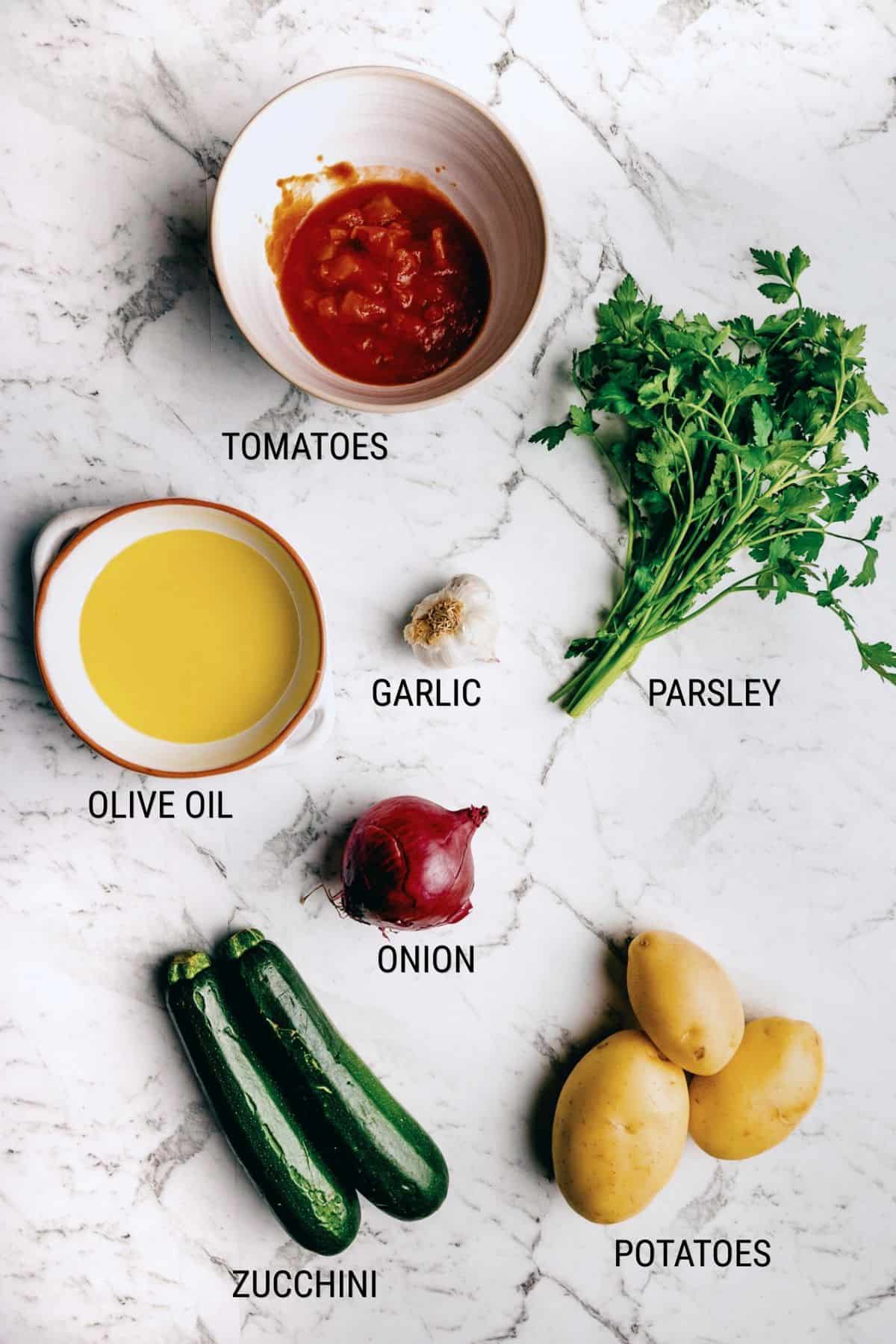
- Zucchini - the hero of the dish in summer when they're at their peak. Choose medium-sized zucchini rather than the giant ones - they have better flavour and less water content, which means your briam roasts rather than steams.
- Potatoes - use a floury variety, they absorb the olive oil and tomato sauce beautifully. Waxy potatoes hold their shape but won't give you that soft, almost melting texture that makes briam so good.
- Red onions - I use red onions for their sweetness. They soften and almost disappear into the dish, adding depth without overpowering. White onions work fine if that's what you have.
- Garlic - fresh only. Grate or finely chop it so it disperses through the whole dish. Greeks don't hold back on garlic - neither should you.
- Tomatoes - this is where it gets interesting. In summer, I grate fresh ripe tomatoes directly into the pan - the skins act as a natural grater and you're left with pure tomato pulp. In winter, a good quality canned crushed tomato or passata works perfectly. Don't use fresh tomatoes out of season - they'll just add water with no flavour.
- Fresh parsley - non-negotiable for me. It lifts the whole dish. Dried parsley is not the same thing - please don't. A handful of fresh dill or mint works beautifully alongside it if you want to experiment.
- Olive oil - the most important ingredient on this list. Use extra virgin, and use more than you think you need. If you can find Greek EVOO, even better - the flavour difference is real. This is a ladera dish, remember - the olive oil is the sauce.
- Salt and pepper - keep the seasoning simple. The vegetables and olive oil do all the talking.
Quick overview - how to make briam
Prep
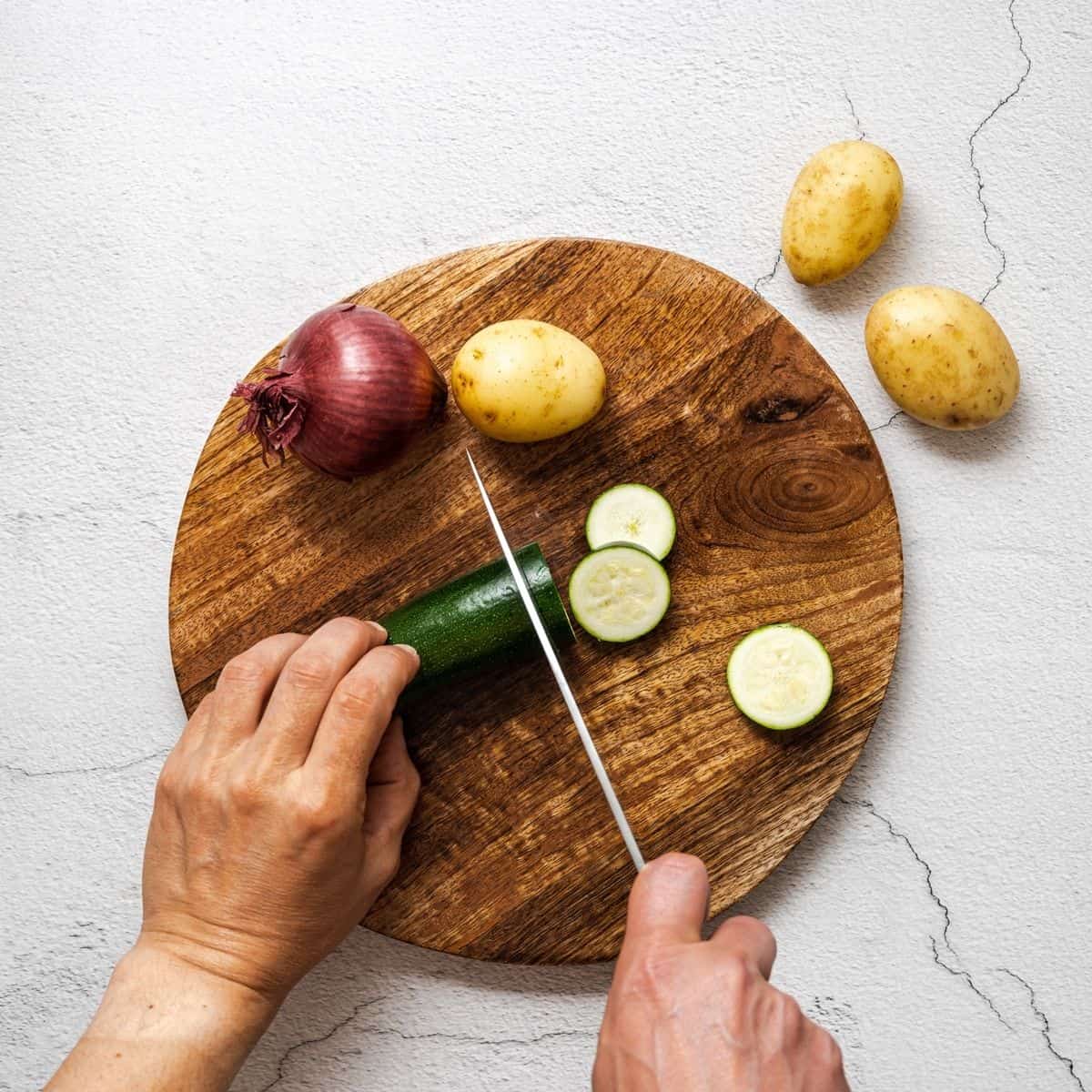
Preheat your oven to 180C (350F). Peel and slice your potatoes, zucchini and onions into rounds of a similar thickness so everything cooks evenly.
Toss
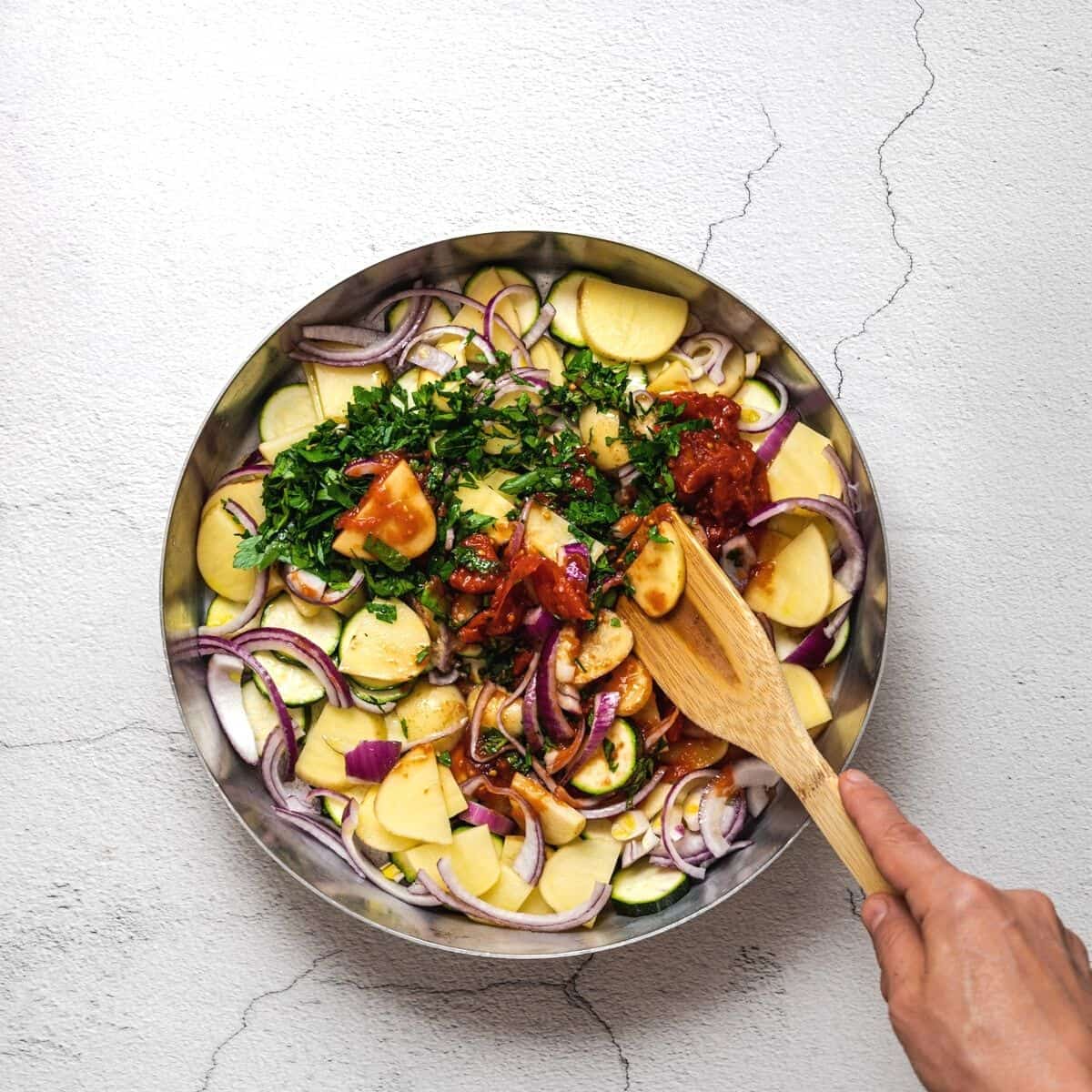
Add all your vegetables to a large baking dish with the grated tomato, garlic, parsley, olive oil, salt and pepper. Give everything a thorough toss so every piece is well coated.
Roast
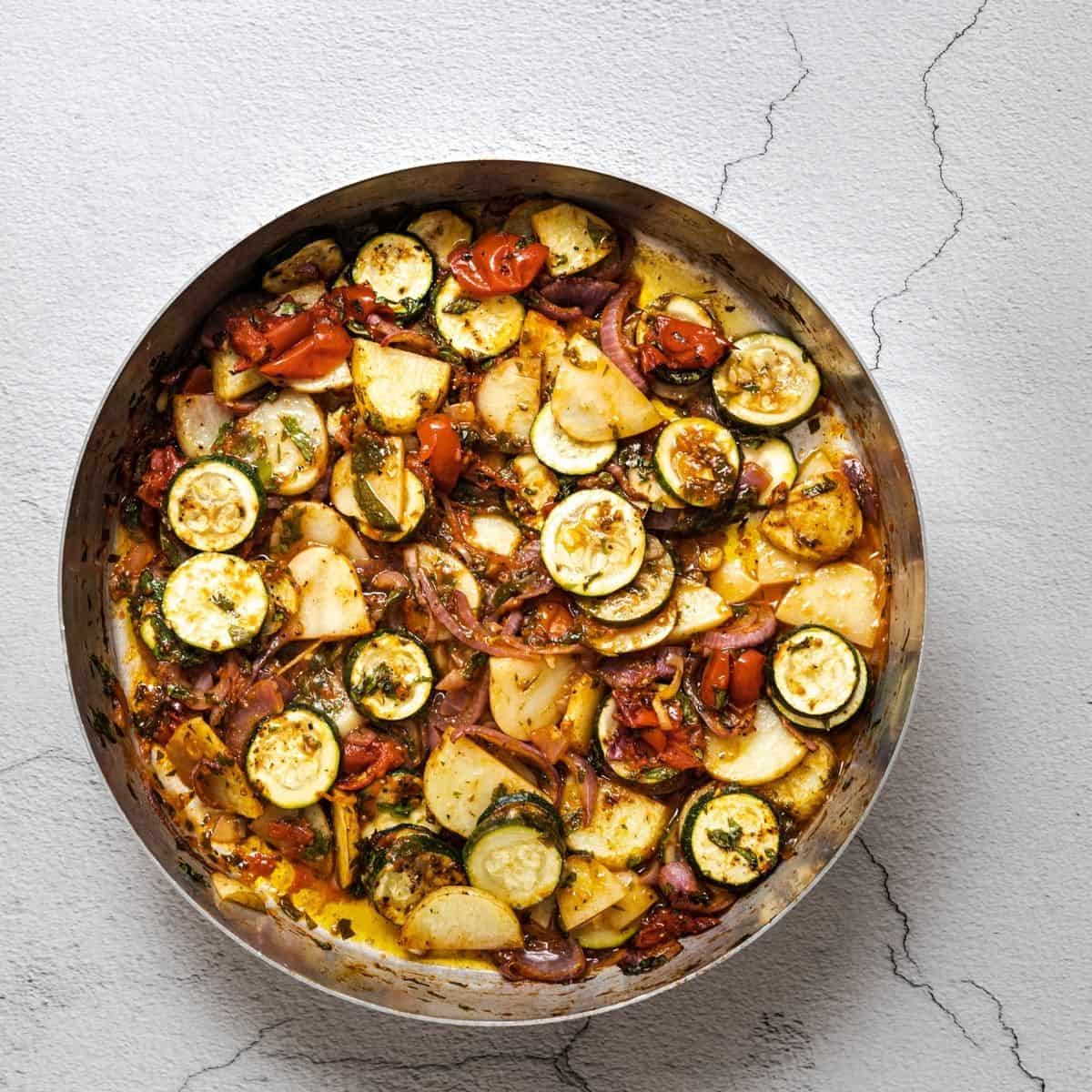
Spread into a single layer - this is what gives you proper roasting, not steaming. Roast for 30 minutes, then stir, add a small splash of water around the edges only if it looks dry, and return to the oven for another 30 minutes.
Rest
Leave to rest for at least 10 minutes before serving. The sauce thickens as it cools and the flavours settle. Greeks often eat briam at room temperature - try it, it's worth it.

Expert Tips
- Single layer is everything. Overcrowded vegetables steam - they don't roast. Use a bigger dish if you need to, or split across two pans.
- Don't drown it. If the dish needs moisture, add water in small amounts around the edges, never over the top. Too much water and you've made vegetable soup.
- Taste your olive oil first. Sounds obvious but a poor quality olive oil will make a poor quality briam.
- Make it the day before. I mean it. Briam is one of those rare dishes that genuinely improves overnight. The vegetables absorb the sauce, the flavours deepen. Cold from the fridge with good bread is a legitimate meal.
- Grate your tomatoes in summer, use canned in winter. Never use flavourless fresh tomatoes out of season - you'll get water and disappointment.
- Add eggplant if you have it. Traditional briam often includes eggplant and bell peppers. I've kept this version simple but don't let that stop you - just increase your olive oil slightly if you're adding more vegetables.
FAQ
Briam is a traditional Greek baked vegetable dish - potatoes, zucchini, onion and tomato slow-roasted in olive oil. It belongs to a category of Greek cooking called ladera - dishes where vegetables are cooked in generous amounts of olive oil and eaten as a main meal. Think of it as Greece's answer to ratatouille, but older and arguably better.
The word comes from the Turkish türlü, reflecting the long culinary overlap between Greek and Ottoman cooking. In some parts of Greece you'll also hear it called tourlou tourlou - a playful doubled word meaning roughly "a bit of everything."
Yes, completely. No animal products, no dairy - just vegetables, olive oil and herbs. It's also naturally gluten-free.
Yes - and I'd actively encourage it. Briam genuinely improves overnight as the vegetables absorb the sauce and the flavours deepen. Make it the day before, store covered in the fridge, and serve at room temperature with good bread.
Store in an airtight container in the fridge for up to 3 days. Reheat gently in the oven or eat at room temperature - both work well.
Serving Suggestions
Briam is a complete meal on its own - don't let anyone tell you otherwise. But if you want to build a proper Greek table around it, here's how I'd do it:
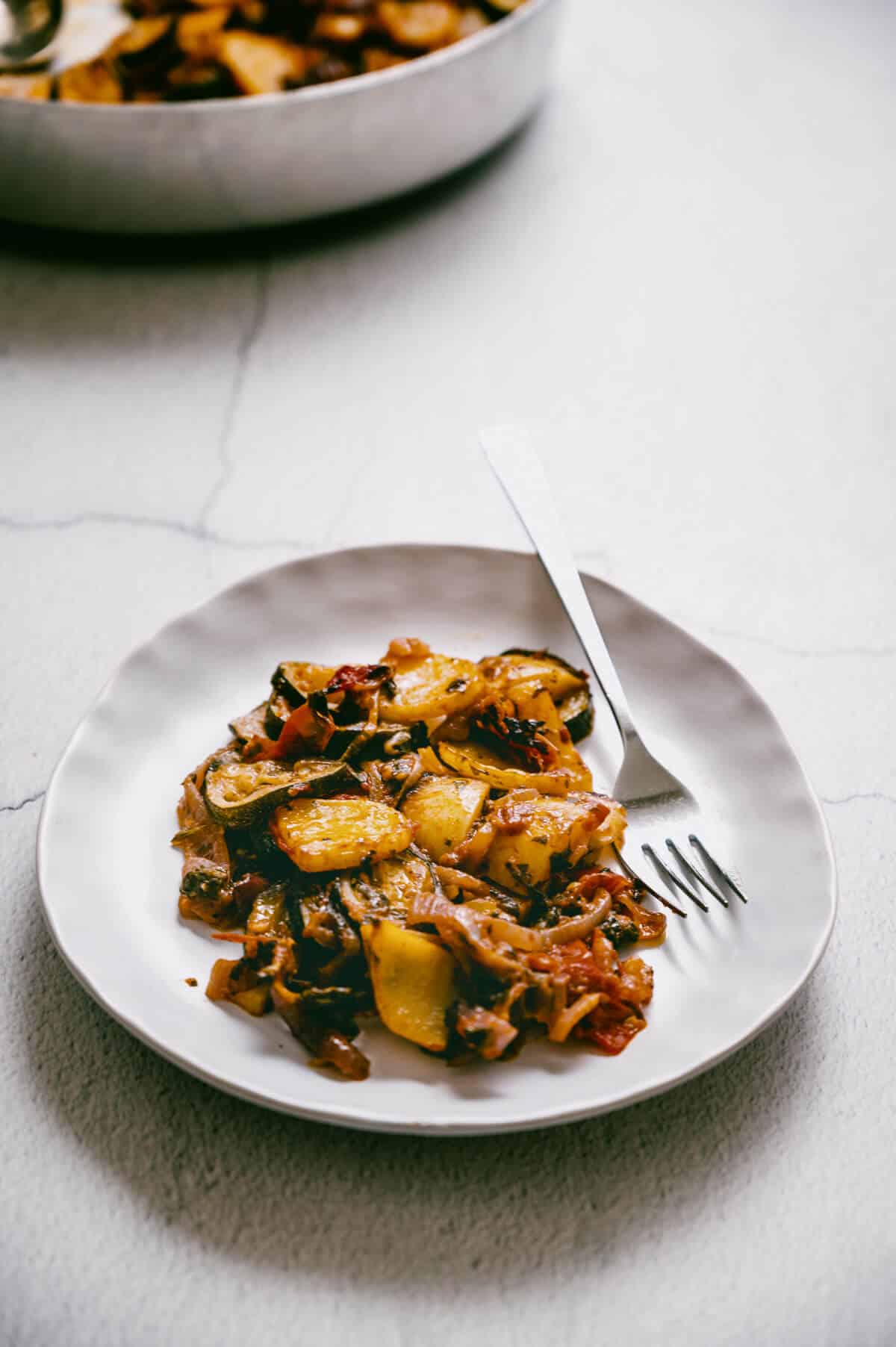
- The classic way - Crusty bread and a generous slice of feta. That's it. That's the meal. The bread mops up the olive oil and tomato sauce at the bottom of the pan - don't waste a drop of it.
- As part of a mezze spread - Briam works beautifully alongside other small dishes. A bowl of tzatziki, some olives, htipiti (my Greek red pepper and feta dip) and warm pita bread and you have a table that looks impressive with very little effort.
- As a side dish - If you're serving briam alongside protein, Greek slow roasted lamb is the obvious pairing - the flavours were made for each other. It also works well with grilled fish or simple pan-fried chicken.
- The next day - Cold briam, straight from the fridge, on top of crusty bread with a little extra feta crumbled over. Greeks will understand immediately. Everyone else will become a convert.
Email This Recipe
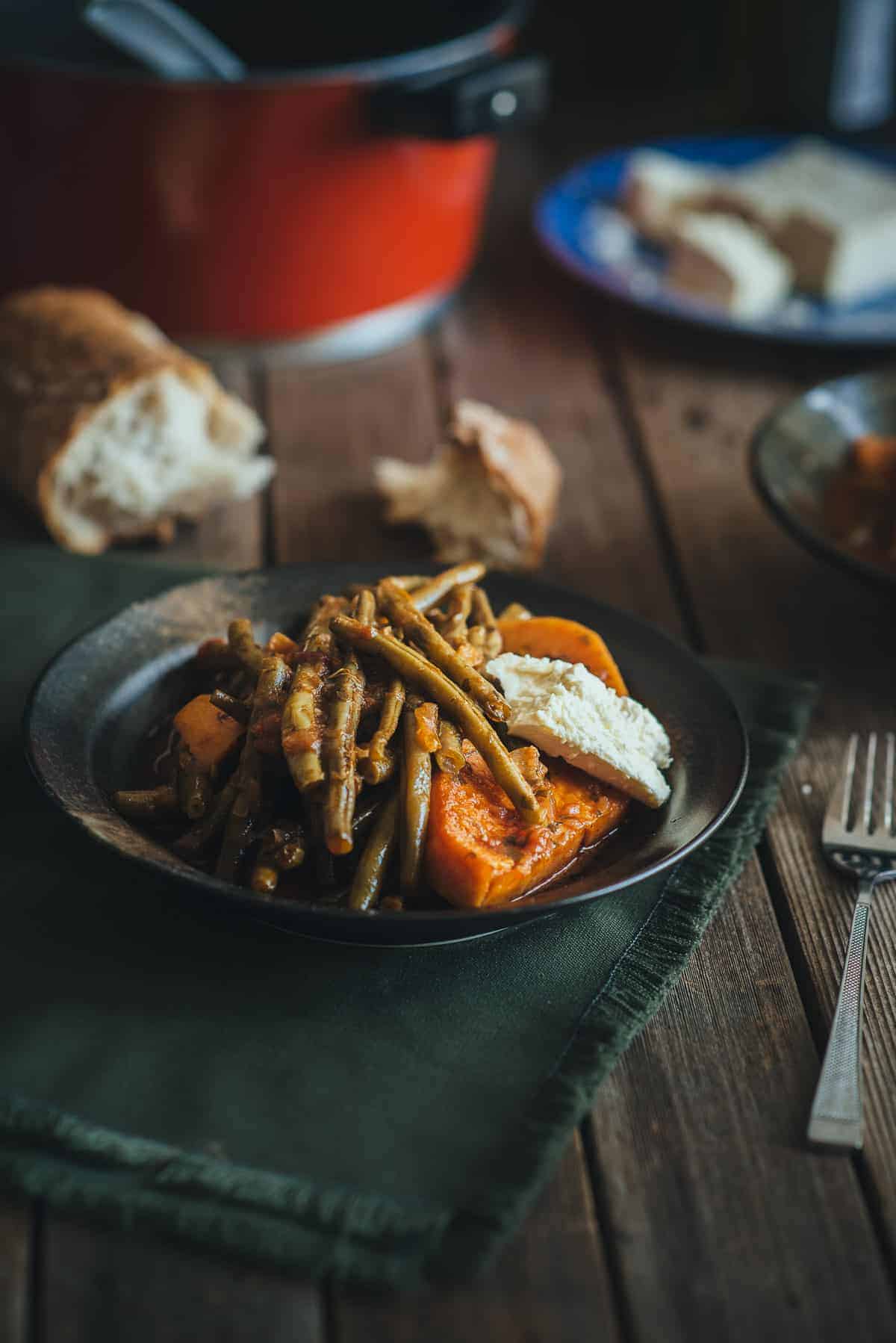
More Greek vegetable dishes



Enjoyed this recipe? Sign up to the Newsletter and follow along on Facebook, Instagram and Pinterest
📖 Recipe
Briam (Greek Roasted Vegetables)
Video
Conversions
Ingredients
- 2 zucchini, sliced into 1 cm discs
- 3 potatoes, peeled, cut in half and sliced into 1 cm "half-moons."
- 1 red onion, sliced thinly
- ⅓ cup olive oil, extra virgin
- 2 cloves garlic, crushed
- 2 tomatoes, grated or 200 grams of chopped tomatoes from a can
- ⅓ cup parsley, finely chopped
- 1 teaspoon salt
- 1 teaspoon black pepper
Instructions
- Preheat your oven to 180 deg C (350 F) and start preparing your vegetables. (Peel and chop your zucchini, potatoes and onions).
- Place the vegetables in a 30 cm (12") baking tray. (see note 1)
- Add the olive oil, garlic, tomatoes, parsley, salt and pepper.
- Give everything a good stir, mix well and make sure not to overcrowd the pan - they should be in a single layer - Bake in the oven for half an hour.
- Remove the dish from the oven and stir everything again. If you find the briam is a little dry, add a little water around the vegetables (be careful not to drown the dish with water; otherwise you will end up with boiled vegetables). Place back in the oven for another 30 minutes. (see note 2)
- Remove and allow to cool for 5-10 minutes before serving.
SAVE THIS RECIPE
Peter's Tips
- Don't overcrowd the baking dish - the vegetables should be in a single layer. This will allow them to roast evenly. Otherwise, they'll steam.
- Be careful not to drown the veggies with water; otherwise, you will end up with boiled vegetables! Remember, this is a baked vegetable dish. (Start by adding half a cup of water and checking again in the last 15 minutes).
Nutrition
This website provides approximate nutrition information for convenience and as a courtesy only. Nutrition data is gathered primarily from the USDA Food Composition Database, whenever available, or otherwise other online calculators.
© Souvlaki For the Soul
Made this recipe?
Rate and Comment below!This post was originally published in July 2020 but was republished with fresh content in December 2021.


Julijan Markovic says
I'm actually amazed at how simple Greek food really is. Going to give this a crack tomorrow. Thanks Peter!
Fiona says
I made this recipe and added red peppers. The potatoes added a very nice touch, and soaked up all the garlicky tomato juices. Very easy, healthy and so delicious. Thanks Peter!
xhuliocooks says
I love this recipe so much, I made my own on my YouTube Channel. Please let me know what do you think.
Peter G says
Wow! Looks fantastic.
Susan Shores says
Just made this last night and it was excellent! A definite repeat! Thank you!
Cher says
I'd like to.make this dish to pair with my Greek meal. Can I make the day before then reheat rather than eat cold or will it dry out too much?
Peter G says
Hi. No it's perfectly fine to reheat the next day. Enjoy!