

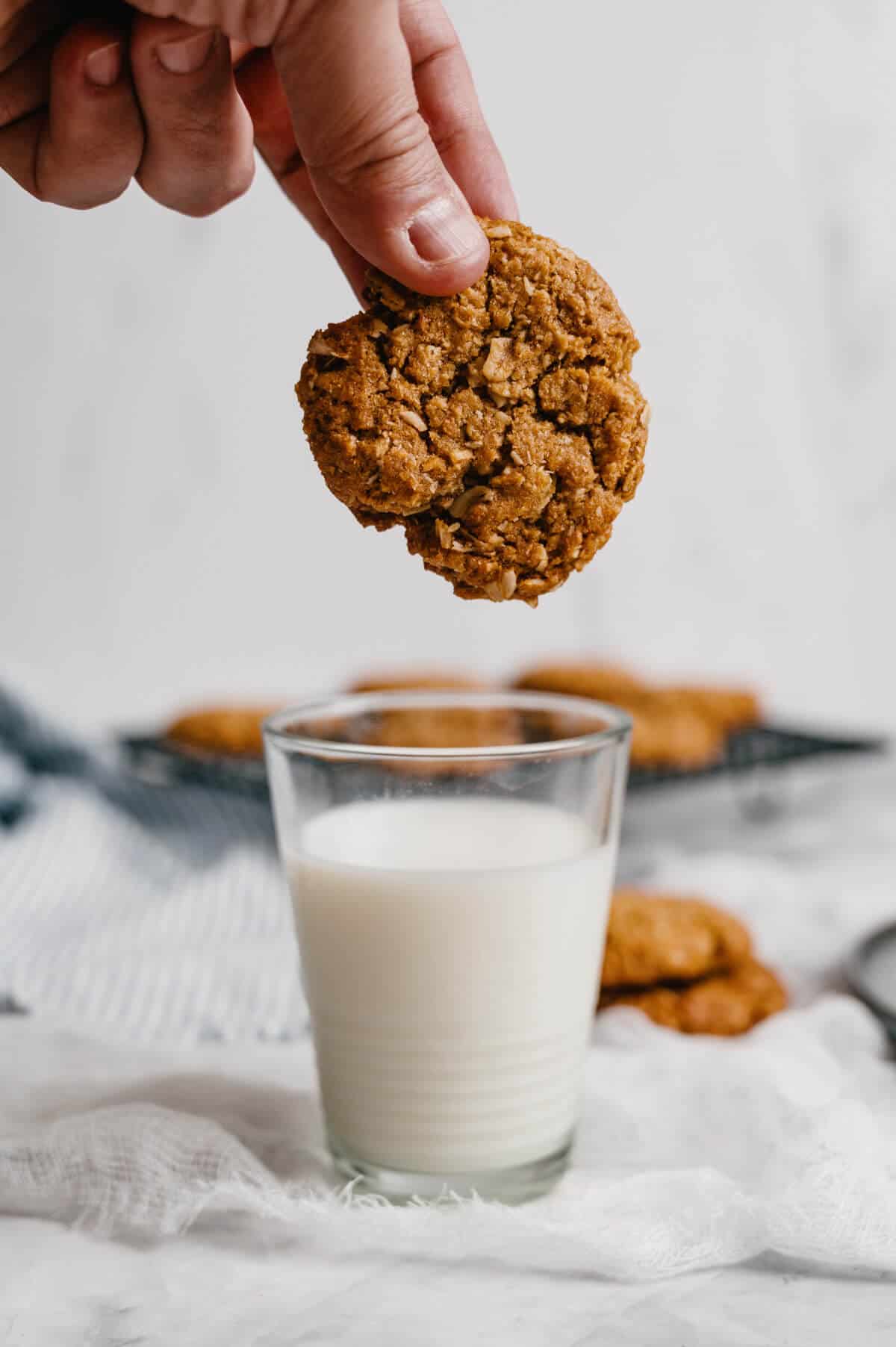
Anzac biscuits are one of those classics that never go out of style. Crisp around the edges, chewy in the centre and rich with golden syrup, they're simple to make and even easier to eat. This version is the one I keep coming back to - balanced, reliable and the right texture every time.
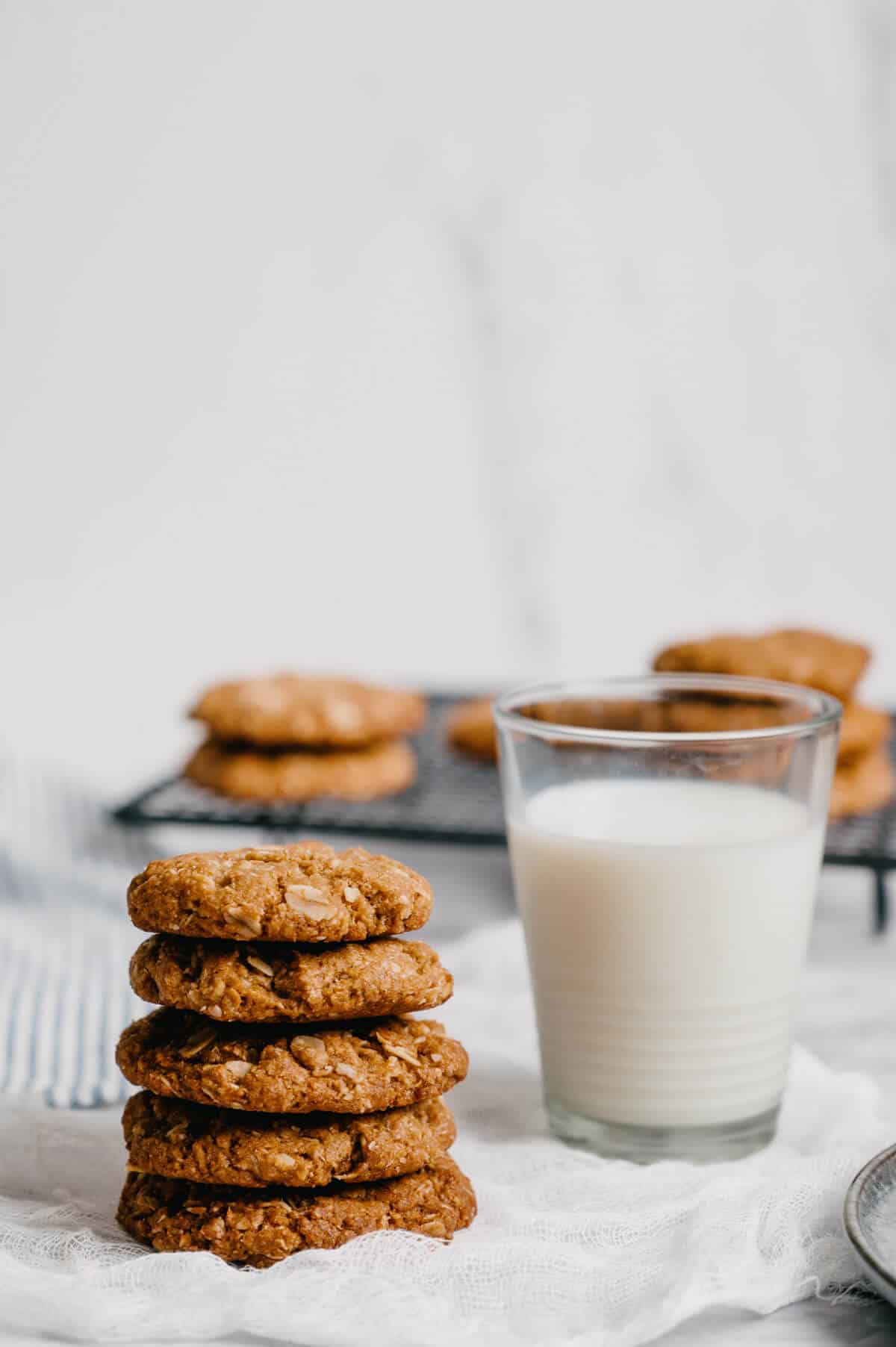
Table of Contents
Recipe snapshot
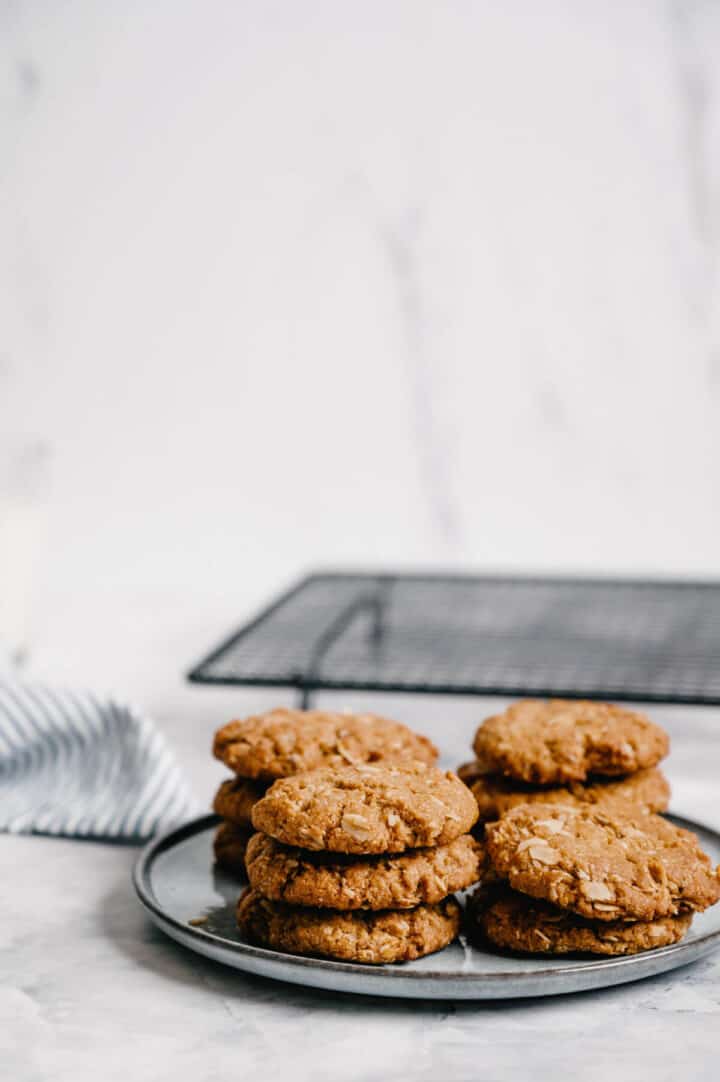
💬 What it is: Classic Australian Anzac biscuits made with oats, coconut and golden syrup - crisp at the edges with a chewy centre.
❤️ Why you'll love it: Simple ingredients, reliable results and that signature caramel flavour that's hard to beat.
👨🍳 How to make it: Mix the dry ingredients, melt the butter and syrup, combine, shape and bake until golden.
What is ANZAC Day?
- If you're reading this from overseas and unfamiliar with the term, the word ANZAC is an acronym. It stands for Australian and New Zealand Army Corps.
- Traditionally, Anzac Day commemorates the lives of soldiers who fought in the First World War. However, in recent times, it has also come to honour the men and women who served in the various conflicts Australia has participated in.
- Australians celebrate and honour the servicemen and women on April 25th. The day is a public holiday marked by various commemorative ceremonies, including dawn services, parades, wreath-laying ceremonies, and cultural and sporting events.
What are Anzac Biscuits?
- Anzac biscuits are traditional oat-based biscuits made without eggs, originally created for their long shelf life.
- Food sent by ship would spoil quickly. The wives and mothers of the soldiers (who were in Australia) came up with a recipe that avoided spoilage (there are no eggs used in traditional Anzac biscuits recipe).
- Storing Anzac biscuits in metal tins kept them crisp for their long journey overseas.
Why you'll love this recipe
- Delicious: That caramel flavour from the golden syrup is hard to beat.
- Simple ingredients: Made with pantry staples and minimal prep.
- Versatile: Enjoy with tea, crumble over ice cream or use as a base for desserts.
Related: if you love Australian sweets try my gluten-free lamingtons or my mini pavlovas.
Ingredients and substitutions
The traditional Anzac biscuit recipe uses simple ingredients that most Australians have on hand, and I have provided that in the recipe card below. However, if you like adding or substituting various components, I have provided some options below. N.B. any changes made will alter the original recipe regarding taste, texture and cooking times.
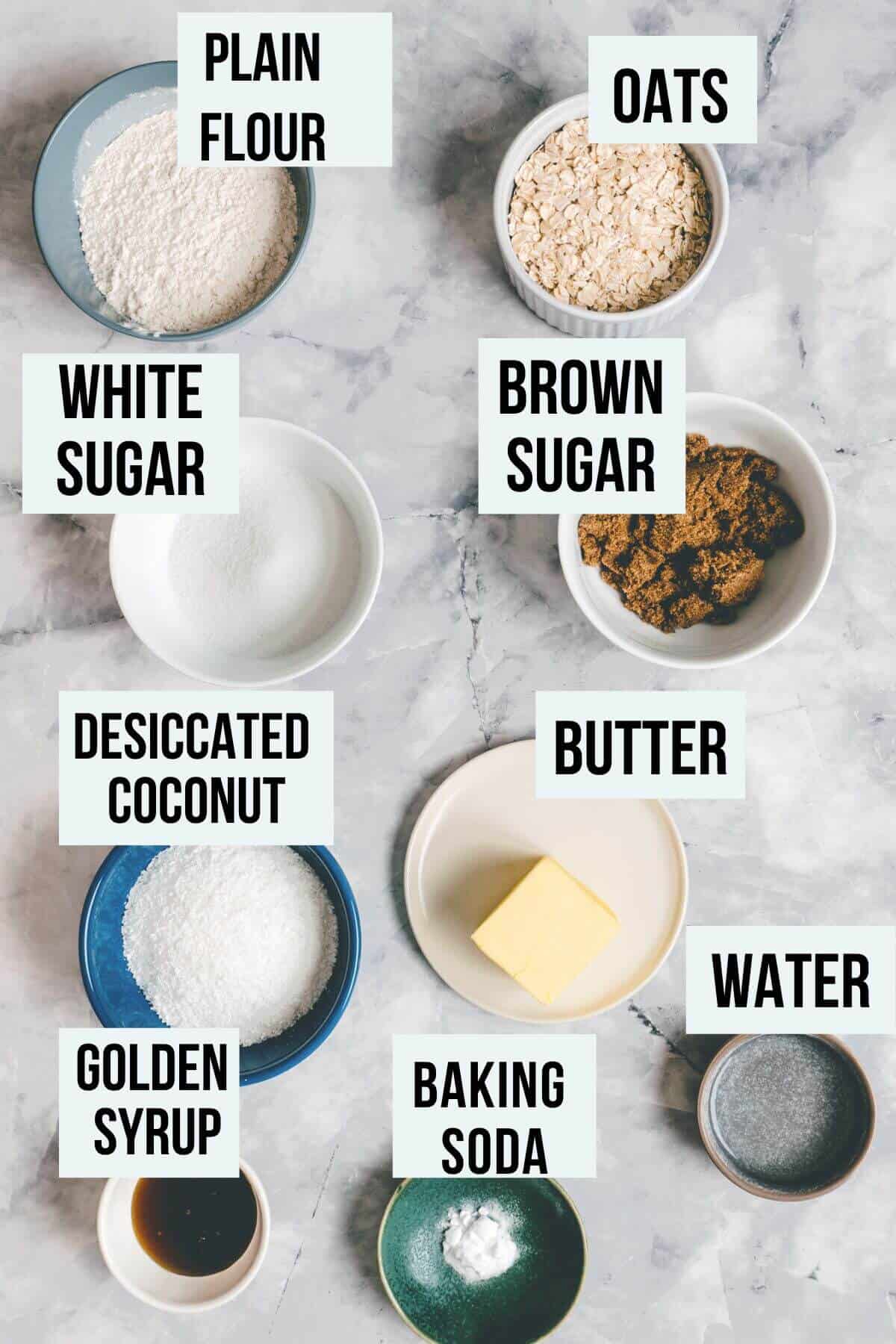
Dry ingredients
- Plain flour (all-purpose flour): Store-bought all-purpose flour is perfect. You can use oat, spelt, or store-bought gluten-free flour. Do not use wholewheat or self-rising flour.
- Oats: Use traditional, good old, fashioned rolled oats. Do not use instant or quick oats, which will make the cookie mixture mushy.
- Brown Sugar: I'm using soft brown sugar. It adds moisture and helps with the chewy texture of the Anzac biscuits.
- White Sugar: Combined with brown sugar, it helps make the cookies crisp.
- Desiccated Coconut: It wouldn't be an Anzac biscuit without coconut! You can sub with raw shredded coconut, but desiccated coconut is preferred as it provides the signature "chew" and flavour. In the U.S., you may look for "sweetened flake coconut".
Wet Ingredients
- Butter: I use unsalted butter (as I do in all my baking recipes). Butter is the traditional fat used in this recipe that lends its distinct taste and aroma to these oatmeal cookies. You can even use vegan butter (or margarine). However, the recipe will be different.
- Golden Syrup: this thick, dark golden nectar is another compulsory ingredient for making Anzac biscuits. It lends a caramel-like flavour to the biscuits and gives them their golden brown colour. It also helps to bind the cookies in place of using eggs. Swap with treacle (sometimes known as "light treacle"), maple syrup or honey. If you only have molasses on hand, be wary that it will make the Anzac biscuits much darker.
- Boiling Water: this helps to activate the bicarbonate soda (baking soda).
- Baking Soda (bicarbonate soda): This leavening agent helps our cookies rise. You can use two teaspoons of baking powder instead, however do not add it to the melted butter. Add it along with the dry ingredients.
Email This Recipe
How to make Anzac biscuits
Preheat your oven to 160°C (320°F) and line a baking tray with baking paper..

- Step 1: In a large bowl, sift the flour.
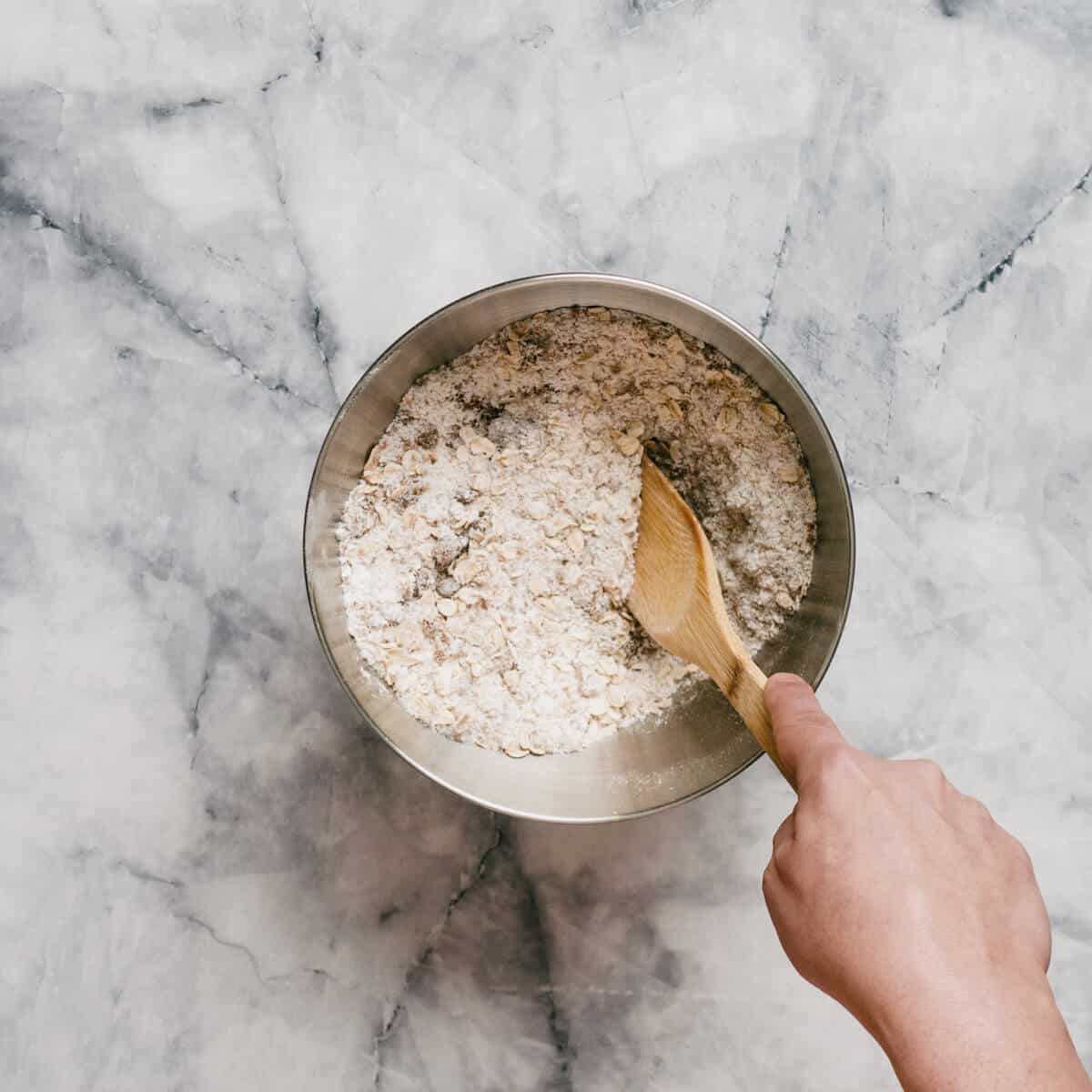
- Step 2: Add the oats, white sugar, brown sugar, and coconut and stir well to combine.

- Step 3: Melt butter, add the golden syrup in a small saucepan, and stir.

- Step 4: Add the boiling water, followed by the baking soda. Stir quickly until the mixture becomes frothy.

- Step 5: Add the melted butter mixture to the oat mixture until well combined.
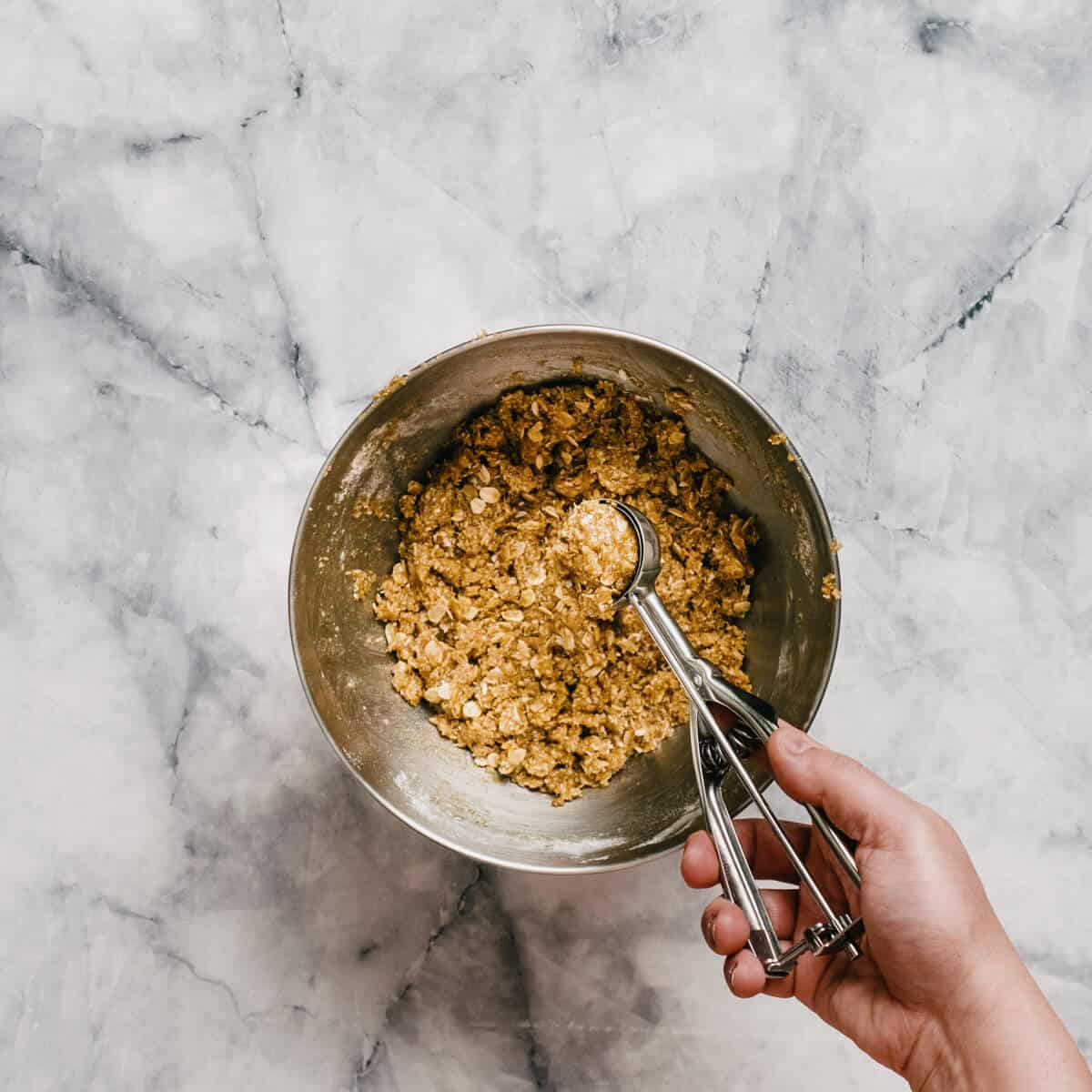
- Step 6: Use a cookie scoop or ice cream scoop to portion out cookies.
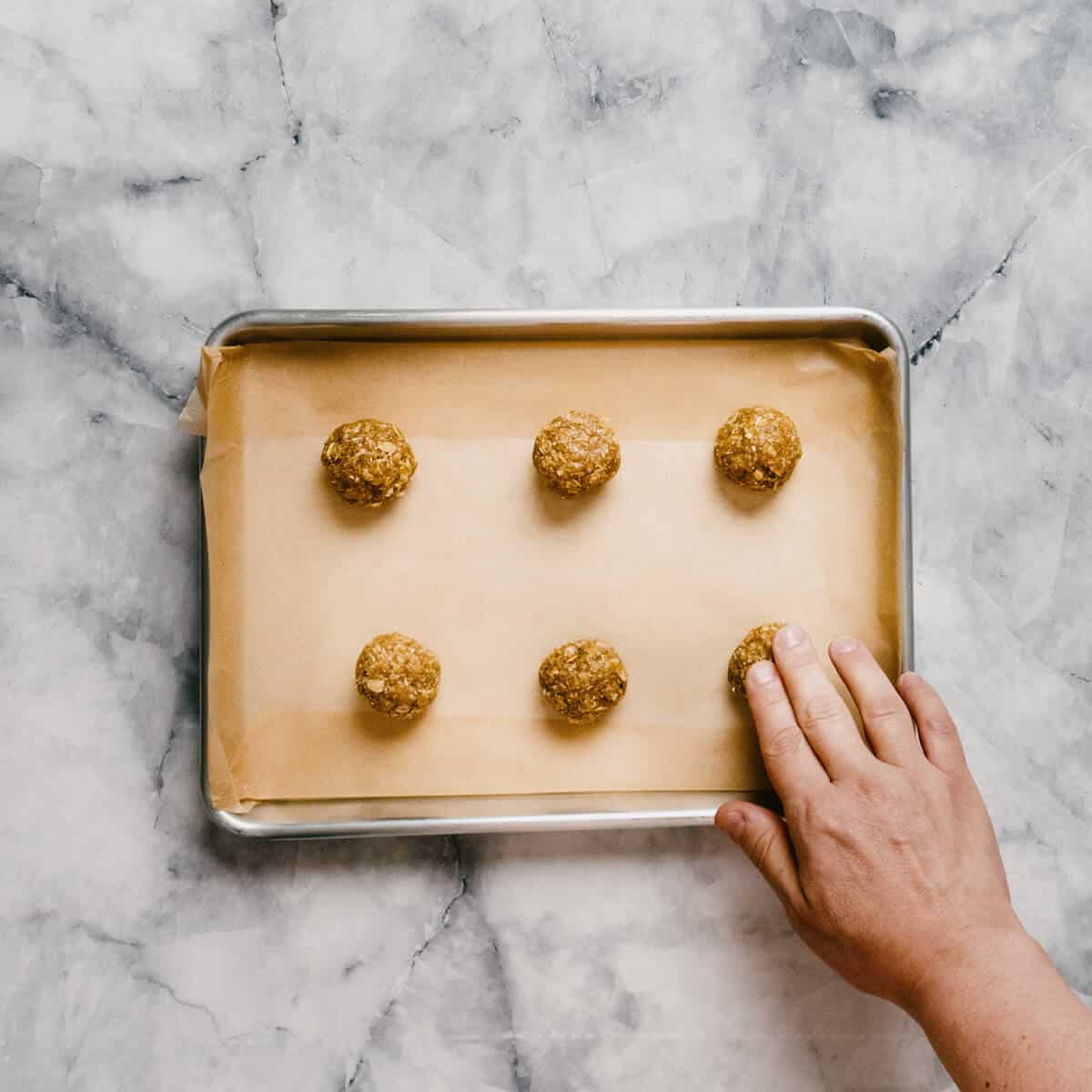
- Step 7: Roll into balls and place onto baking sheet approximately 2 inches apart. Flatten them slightly using your hands or a fork.
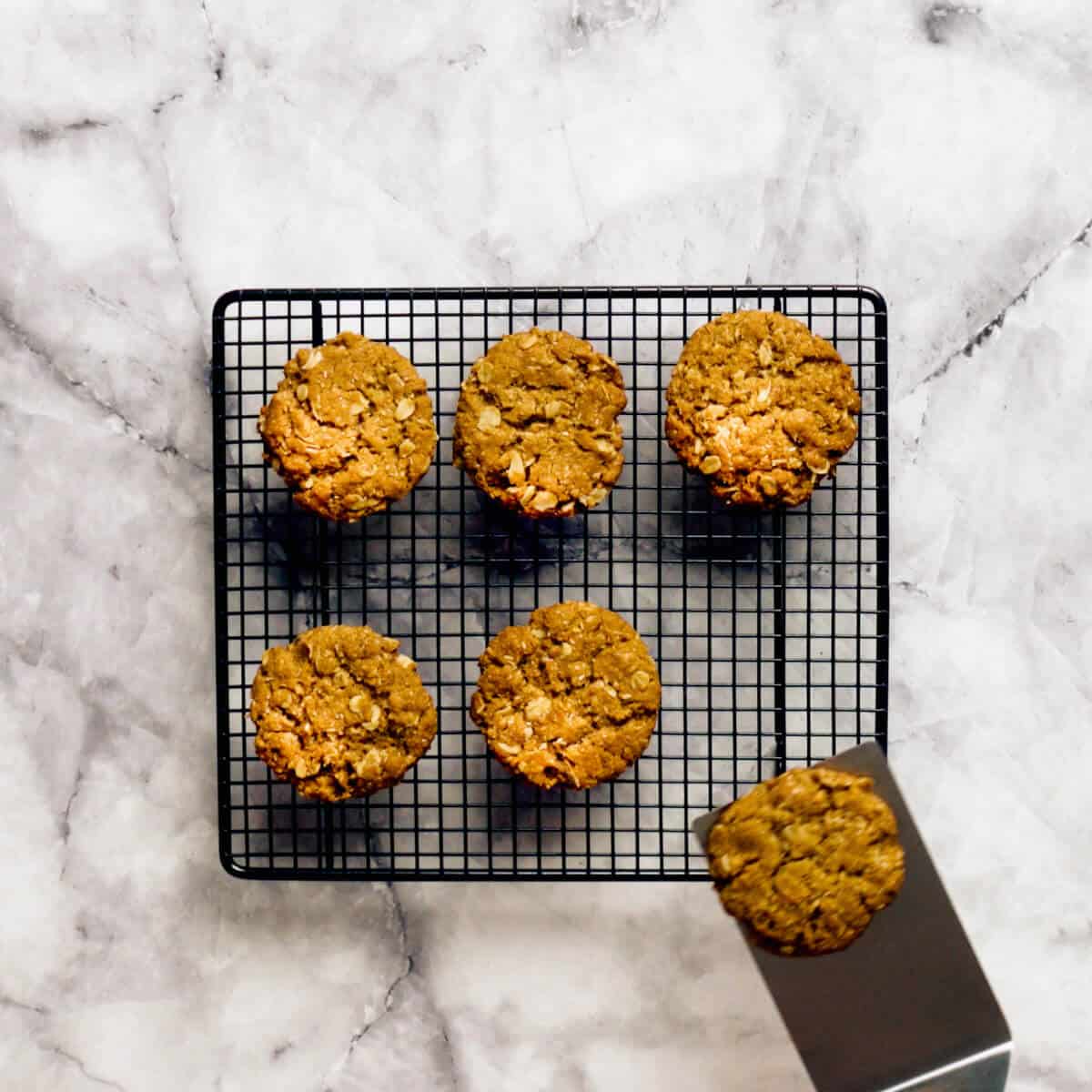
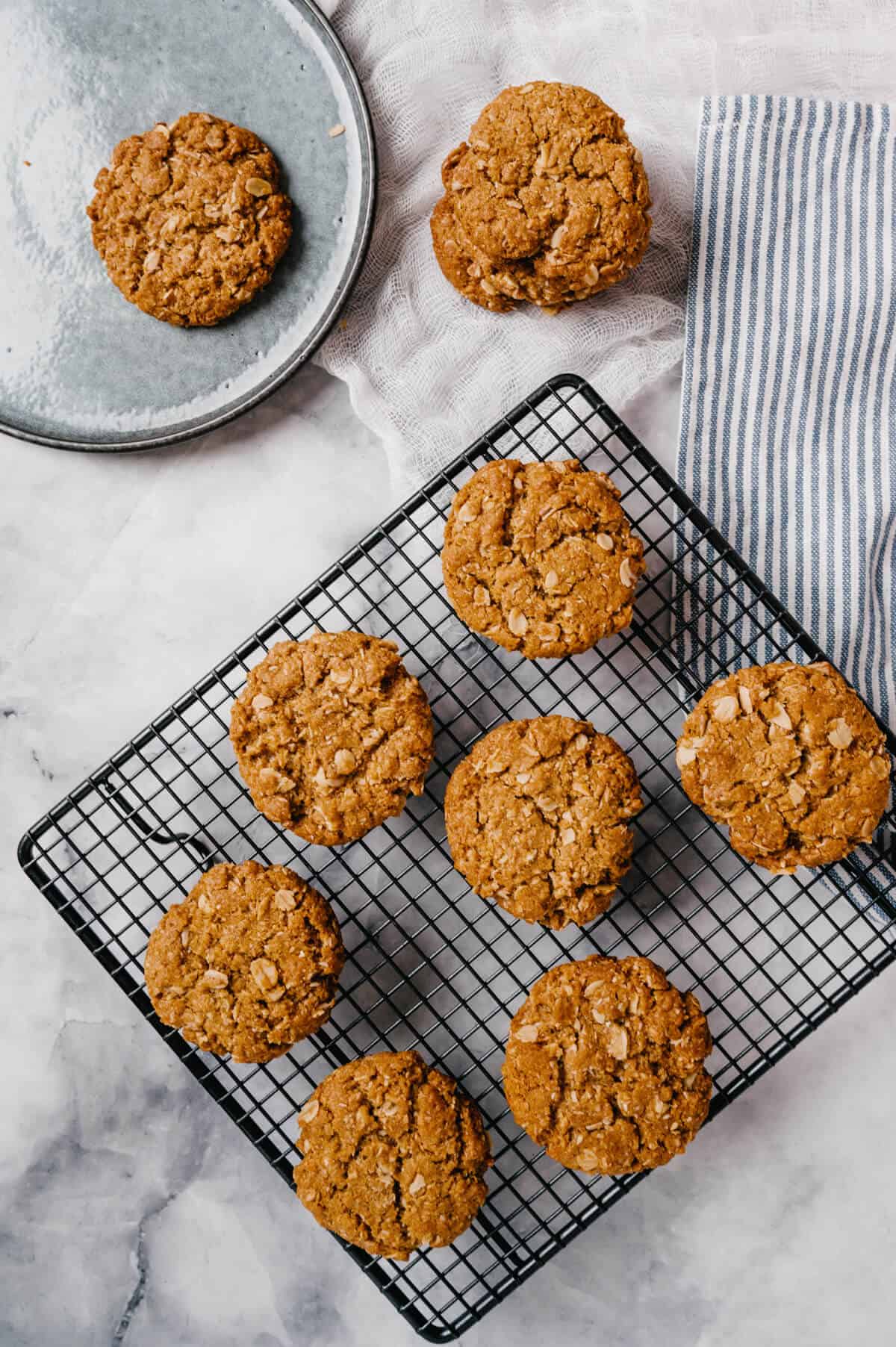
- Step 8: Bake for 15 minutes until the edges are slightly brown and they are golden in colour. Allow Anzac biscuits to cool on the baking tray for a few minutes before cooling them on a wire rack.
Expert tips
- Bake time controls texture:
- 12 minutes - softer, more delicate
- 15 minutes - chewy centre (sweet spot)
- 20 minutes - crisp throughout
- Each cookie scoop portion weighs approximately 30 grams (1 ounce).
- Make sure you leave space between them as they do spread when cooking.
Storage
Store in an airtight container for up to 7 days.
To refresh, warm in a 180°C oven for 5 minutes to bring back the crisp edges.
Recipe FAQ
An Anzac biscuit and an Anzac cookie are essentially the same things. The only difference is in the name - in Australia and New Zealand, they call them biscuits, while in the United States and Canada, they refer to them as cookies. But, regardless of the name, they are a tasty treat that many enjoy.
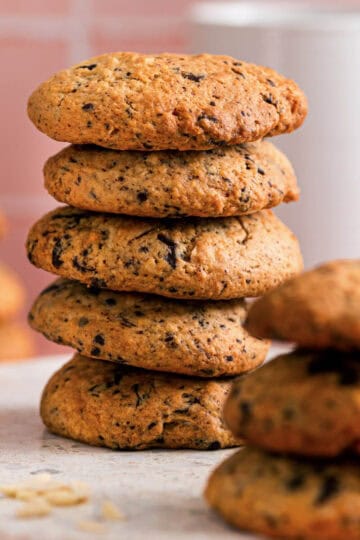
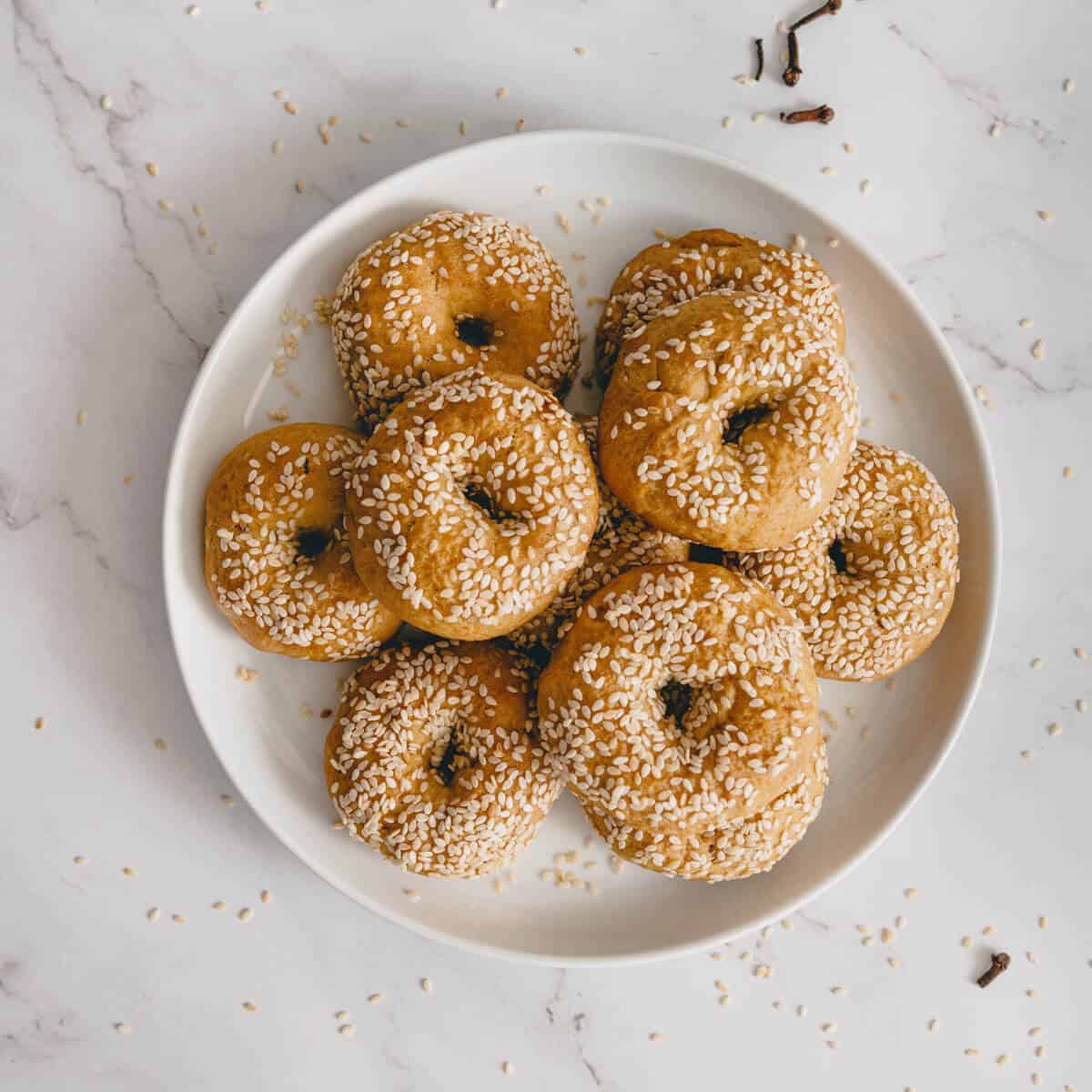
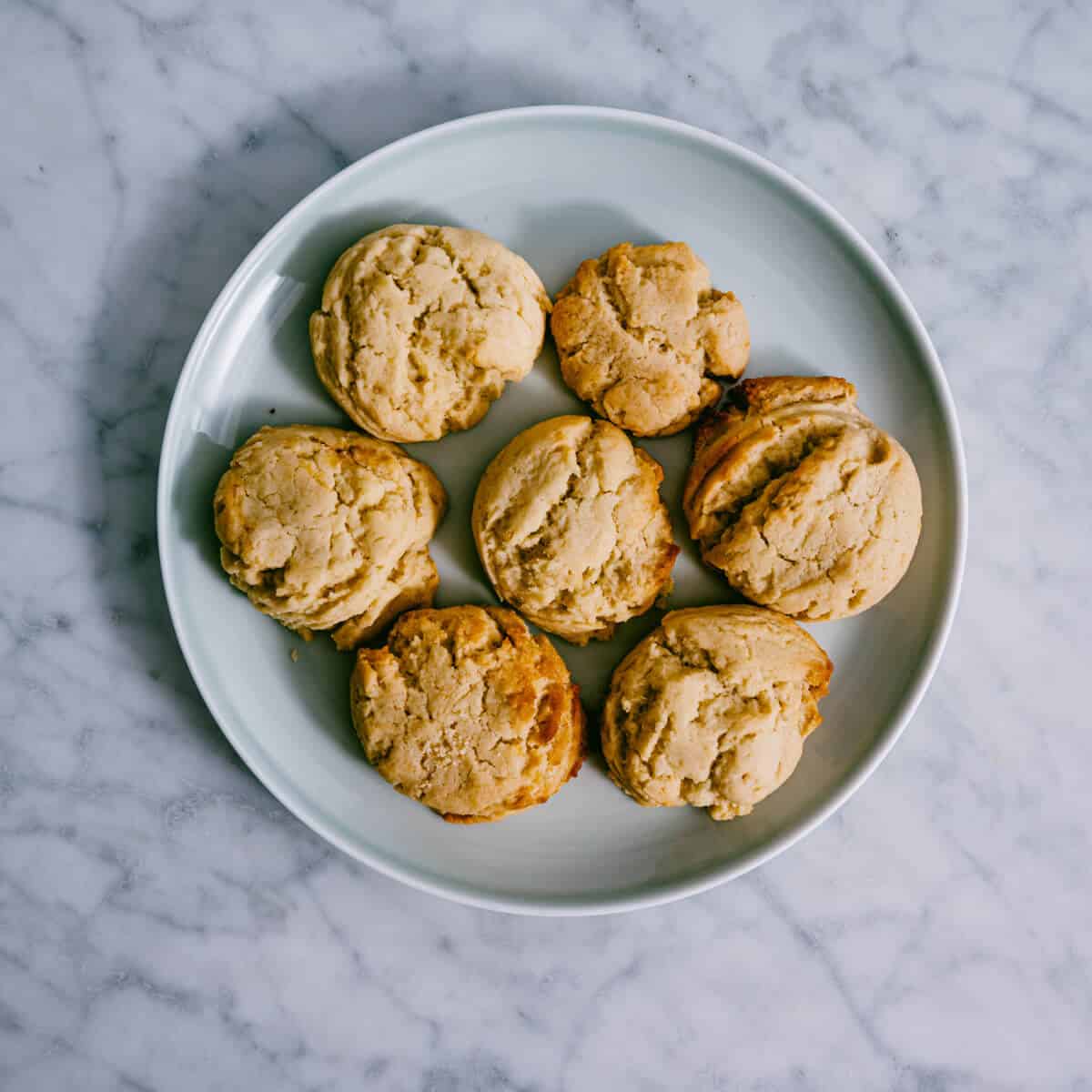
More cookie recipes

Enjoyed this recipe? Sign up to the Newsletter and follow along on Facebook, Instagram and Pinterest
📖 Recipe
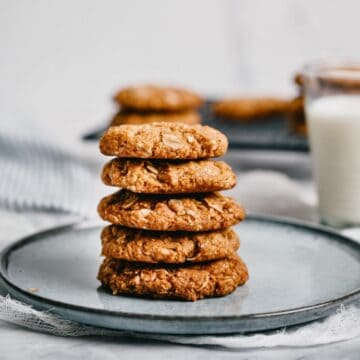
Anzac Biscuits (Crispy Edges, Chewy Centre)
Video
Conversions
Ingredients
- 150 grams plain flour, (all-purpose flour)
- 90 grams rolled oats
- 110 grams white sugar
- 100 grams brown sugar
- 85 grams desiccated coconut
- 125 grams butter, unsalted
- 2 tablespoons golden syrup
- 2 tablespoons boiling water
- 1 teaspoon bicarbonate soda
Instructions
- Preheat your oven to 160°C (320°F) and line a baking tray with baking paper. (see note 1)
- In a large bowl, sift the flour.150 grams plain flour (all-purpose flour)
- Add the oats, white sugar, brown sugar, and coconut and stir well to combine.90 grams rolled oats, 110 grams white sugar, 100 grams brown sugar, 85 grams desiccated coconut
- Melt butter, add the golden syrup in a small saucepan, and stir.125 grams butter unsalted, 2 tablespoons golden syrup
- Add the boiling water, followed by the baking soda. Stir quickly until the mixture becomes frothy.2 tablespoons boiling water, 1 teaspoon bicarbonate soda
- Add the melted butter mixture to the oat mixture until well combined.
- Use a cookie scoop or ice cream scoop to portion out cookies. (see note 2)
- Roll into balls and place onto baking sheet approximately 2 inches apart. Flatten them slightly using your hands or a fork. (see note 3)
- Bake for 15 minutes until the edges are slightly brown and they are golden in colour. Allow them to cool on the baking tray for a few minutes before cooling them on a wire rack. (see note 4)
SAVE THIS RECIPE
Peter's Tips
- Use low heat. I found the best oven temperature at 160° C (320°F) through many experiments. Low and slow is best for this sweet biscuit.
- Each cookie scoop portion weighs approximately 30 grams (1 ounce).
- Make sure you leave space between them as they do spread when cooking.
- If you prefer a crispier cookie, bake them for 20 minutes (yes, they will be slightly harder when cooled!). Fifteen minutes is the sweet spot. However, if you prefer a soft Anzac biscuit, bake them for 12 minutes (gently remove them as they are quite delicate).
Nutrition
This website provides approximate nutrition information for convenience and as a courtesy only. Nutrition data is gathered primarily from the USDA Food Composition Database, whenever available, or otherwise other online calculators.
© Souvlaki For the Soul
Made this recipe?
Rate and Comment below!This post was originally published in April 2012 but has been updated with new information, pictures and video in April 2026.
Leave a Reply